The best miter saws for cutting crown molding are typically dual-bevel sliding compound models with a 12-inch blade, offering superior precision and capacity for intricate angled cuts. These saws, such as the DeWalt DWS780 or Bosch GCM12SD, feature advanced systems like XPS LED cut lines or Axial-Glide mechanisms, which ensure accurate alignment and smooth operation, crucial for achieving seamless crown molding joints.
1. What is a Miter Saw?
A miter saw is a specialized power tool designed for making precise angled cuts, typically across the grain of a workpiece. It features a circular blade mounted on a hinged, pivoting arm that allows for clean, consistent cuts at various angles, making it indispensable for trim work, framing, and detailed carpentry projects. Unlike a standard circular saw, a miter saw offers superior accuracy and efficiency for repetitive angled cuts.
Types of Miter Saws for Crown Molding
When tackling crown molding, not all miter saws are created equal. The unique geometry of crown molding, which sits at an angle against both the wall and ceiling, demands specific capabilities from your saw. For shop curated miter saws on this site.
Compound Miter Saw: This is the most basic type suitable for crown molding. It allows the blade to pivot left and right for miter cuts and to tilt (bevel) in a single direction for angled cuts through the thickness of the board. This dual-action capability is essential for creating the compound angles required for crown molding joints.
Dual-Bevel Compound Miter Saw: An upgrade from the single-bevel, a dual-bevel compound miter saw allows the blade to tilt in both the left and right directions. This feature significantly enhances efficiency, as you won’t need to flip your workpiece to make opposing bevel cuts, saving time and reducing the chance of errors, especially with long pieces of crown molding. For anyone serious about crown molding, a dual-bevel saw is highly recommended.
Sliding Compound Miter Saw: Combining the features of a compound miter saw with a sliding mechanism, this type offers an extended cutting capacity. The blade can move forward and backward along rails, allowing you to cut much wider boards than a non-sliding saw of the same blade size. For larger crown molding profiles, a sliding compound miter saw is invaluable, ensuring you can handle even the most substantial pieces with ease.
2. How to Choose the Right Miter Saw for Crown Molding
Selecting the ideal miter saw for crown molding can seem complex, but by focusing on key specifications and your project requirements, you can make an informed decision. The right saw will simplify intricate cuts and help you achieve professional finishes.
Determine Your Specific Needs
Before diving into features, consider the scope of your projects. Are you a weekend DIYer tackling a single room, or a professional carpenter working on extensive installations? The size and complexity of the crown molding you plan to cut will dictate the necessary power and capacity of your saw. Larger, wider crown profiles will require a saw with greater cutting depth and width.
Key Factors to Consider When Buying a Miter Saw
Several critical factors contribute to a miter saw’s suitability for crown molding. Paying attention to these details will ensure you invest in a tool that performs reliably and precisely.
Blade Size and Cutting Capacity: The blade’s diameter directly impacts the saw’s cutting capacity. For most crown molding profiles, a 12-inch blade is highly recommended, as it provides the necessary clearance to cut wider crown up to 7.5 inches when nested. Smaller 10-inch blades often limit this capacity, making them less versatile for diverse crown molding projects. Understanding “nested capacity” — the maximum height of crown molding that can be cut when positioned against the saw’s fence and table at its spring angle — is crucial.
Motor Power and Speed: A powerful motor ensures smooth, consistent cuts, especially through denser hardwoods. Most 10-inch and 12-inch miter saws feature 15-amp motors, which provide ample power for demanding crown molding tasks. Higher RPM (revolutions per minute) generally leads to cleaner cuts, reducing splintering and tear-out, which is vital for delicate trim.
Bevel and Miter Angles: The ability to make precise miter and bevel adjustments is paramount for crown molding. A dual-bevel saw, which tilts both left and right, is a significant advantage, eliminating the need to reorient the workpiece for opposing cuts. Look for saws with clear angle scales and positive stops at common crown molding angles, such as 31.6 degrees for bevel and 33.9 degrees for miter, which are frequently used for standard crown spring angles.
Accuracy Features (Laser/LED Cut Lines): Precision is non-negotiable for crown molding. Features like XPS LED cut line systems (which project a shadow of the blade onto the workpiece) or integrated laser guides can dramatically improve accuracy by clearly indicating the exact cut line. These systems help align the blade precisely, reducing guesswork and material waste.
Safety Features: As with any power tool, safety is paramount. Essential safety features include a robust blade guard that retracts automatically, an electric brake to stop the blade quickly after the trigger is released, and an effective dust collection system. A good dust collection system not only keeps your workspace clean but also improves visibility for safer, more accurate cuts.
Portability and Storage: Consider where you’ll be using and storing your saw. Corded models offer consistent power without battery limitations, while cordless miter saws provide excellent portability for job sites or areas without readily available power outlets. However, cordless saws often come with a higher price tag due to battery and charger costs. Weight and footprint are also important; some sliding saws feature designs that minimize rear clearance, making them suitable for smaller workshops.
Fence System: A tall, sturdy fence is critical for supporting crown molding vertically during nested cuts. Many saws feature sliding fences that can be moved out of the way for bevel cuts, providing full support for various material sizes. Ensure the fence is robust and can be adjusted accurately.
Brand Reputation and Price: Reputable brands like DeWalt, Bosch, and Makita have a long-standing history of producing high-quality, reliable miter saws. While these often come with a higher price tag, they typically offer superior precision, durability, and better customer support. Balance your budget with the features and quality required for your projects, viewing a miter saw as an investment in your craftsmanship.
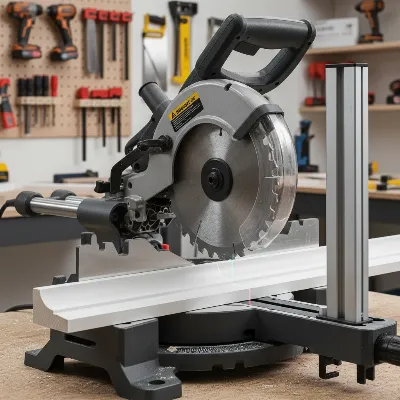 A miter saw with crown molding correctly positioned for a nested cut, upside down against the fence and table, ready for cutting.
3. Comparison of Popular Miter Saws for Crown Molding
To help visualize the differences between top models, here’s a comparative overview of several popular miter saws that excel at cutting crown molding. This table highlights their key features, capacities, and general suitability.
| Saw Model (Brand, Blade Size, Type) | Key Feature for Crown Molding | Bevel Type | Sliding | Notable Pros | Notable Cons | Approx. Price Range |
|---|---|---|---|---|---|---|
| DeWalt DWS780 12-Inch Double Bevel Sliding Compound | XPS LED Cut Line System, 7.5″ Nested Crown Capacity | Dual | Yes | Extremely precise, high capacity, durable | Premium price, heavy/large | Premium |
| Bosch GCM12SD 12-Inch Dual-Bevel Sliding Glide | Axial-Glide System (space-saving, smooth), 6.5″ Nested Crown Capacity | Dual | Yes | Ultra-smooth action, compact footprint, exceptional build | High price | Premium |
| Makita LS1219L 12-Inch Dual-Bevel Sliding Compound | Unique 2-Steel Rail System (minimal rear clearance), 6.75″ Vertical Capacity | Dual | Yes | Space-efficient, smooth slides, good value for features | Dust collection could be improved | Mid-Premium |
| Milwaukee M18 FUEL 10-Inch Dual Bevel Sliding Compound (2734-21) | Cordless (portability), Shadow Cut Line, ample positive stops | Dual | Yes | Unmatched portability, robust cordless power, accurate | Higher initial cost (battery), average dust collection | Premium Cordless |
| SKIL 10-Inch Dual-Bevel Sliding Compound MS6305-00 | Excellent Value, Quick Angle Adjustments | Dual | Yes | Affordable, good capacity for price, intuitive adjustments | 10-inch blade limits largest crown molding | Budget-Mid |
4. Top 5 Best Miter Saws for Cutting Crown Molding in 2026
Based on extensive research and expert reviews, these five miter saws stand out as exceptional choices for tackling crown molding projects in 2026. They offer a blend of precision, power, and features that cater to both professionals and dedicated DIYers.
1. DeWalt DWS780 12-Inch Double Bevel Sliding Compound Miter Saw
The DeWalt DWS780 consistently ranks as a top performer for crown molding. Its innovative XPS LED cut line system projects a precise shadow of the blade, eliminating alignment issues common with complex angled cuts. With an impressive 7.5-inch nested crown capacity, it handles nearly all residential crown profiles. The saw’s dual bevel system tilts 49 degrees in both directions, with positive stops at critical crown molding angles, ensuring repeatable accuracy. This model is a gold standard for serious crown molding work, justifying its premium price with unmatched precision and robust construction.
2. Bosch GCM12SD 12-Inch Dual-Bevel Sliding Glide Miter Saw
Often hailed as a precision powerhouse, the Bosch GCM12SD is renowned for its Axial-Glide™ system. This unique design offers ultra-smooth, consistent cutting action while saving up to 10 inches of workspace compared to conventional sliding saws. For tight workshops or mobile job sites, its compact footprint is a huge advantage. It provides precise miter and bevel adjustments, delivering showroom-grade cuts ideal for high-end trim work. The exceptional build quality and smooth operation make it a favorite among professionals.
3. Makita LS1219L 12-Inch Dual-Bevel Sliding Compound Miter Saw
The Makita LS1219L delivers outstanding crown molding performance at a competitive price point, offering excellent value. Its distinctive 2-steel rail sliding system requires minimal rear clearance, making it another excellent choice for space-conscious users. With a 6.75-inch vertical cutting capacity, it capably handles most common residential crown profiles. The saw includes built-in crown stops and clear capacity markings, simplifying the setup for compound cuts and contributing to its reputation for precision and user-friendliness.
4. Milwaukee M18 FUEL 10-Inch Dual Bevel Sliding Compound Miter Saw (2734-21)
For those prioritizing portability and freedom from cords, the Milwaukee M18 FUEL 2734-21 is an exceptional cordless option. This high-quality battery-powered saw features a reliable shadow cut line indicator and numerous positive blade-angle stops, boosting productivity and accuracy on the job site. Despite its robust power, the 40.6-pound aluminum construction and integrated carry handles ensure it remains quite portable. While an investment in the M18 battery system is required, its convenience and power make it a top choice for professionals on the move.
5. SKIL 10-Inch Dual-Bevel Sliding Compound Miter Saw (MS6305-00)
The SKIL MS6305-00 strikes an impressive balance between cost, value, and capability, making it the best budget-friendly option for crown molding. This 10-inch dual-bevel sliding compound miter saw offers quick and simple angle adjustments, allowing users to make precise cuts without breaking the bank. While its 10-inch blade has a slightly smaller cutting capacity compared to 12-inch models, it is more than sufficient for most residential crown molding projects. It’s a reliable and accessible tool for DIYers and those needing solid performance without a premium price tag.
5. Safe and Effective Miter Saw Techniques for Crown Molding
Mastering crown molding cuts requires not only the right saw but also proper technique and an unwavering commitment to safety. Precision and consistency are key to achieving joints that blend seamlessly.
Essential Safety Measures
Always prioritize safety when operating a miter saw. Wear safety glasses to protect your eyes from flying debris, ear protection to guard against loud noise levels, and a dust mask to minimize inhalation of fine sawdust. Maintain a stable stance with clear footing and ensure your workspace is free of clutter. When making cuts, hold the material firmly against both the fence and the table with one hand while operating the saw with the other. Push the saw blade steadily down into the wood; never pull the blade through the material, as this can cause kickback or an uneven cut.
Basic Cutting Techniques for Crown Molding
Crown molding’s angled installation position means you can’t simply lay it flat for standard miter cuts. There are two primary methods for cutting crown molding: nested and flat.
Nested (Vertical) Cutting: This is often the preferred method for many, as it simplifies the cutting process. You position the crown molding upside down in the saw, with the edge that will meet the ceiling resting flat on the saw’s bed (table) and the edge that will be against the wall resting flat against the saw’s fence. This setup essentially uses the molding’s inherent spring angle to create the bevel, meaning you only need to adjust the miter angle on the saw. For 90-degree corners, you’ll set your miter angle to 45 degrees. For an inside left corner, miter to the right. For an inside right corner, miter to the left. For an outside left corner, miter to the left. For an outside right corner, miter to the right. Clearly marking “Top/Ceiling” and “Bottom/Wall” on your molding can help prevent confusion.
Flat (Compound) Cutting: This technique involves laying the crown molding flat on the saw table. While it can handle very large crown that won’t fit nested, it is generally more complex. It requires calculating specific miter and bevel angles based on the crown’s unique spring angle, and often necessitates referring to compound angle charts. This method uses the saw’s miter and bevel adjustments simultaneously to create the necessary compound angle.
Coping (Alternative for Inside Corners): For inside corners, some carpenters prefer “coped” joints over mitered ones, especially in older homes with non-square walls. A coped joint involves cutting one piece of molding straight into the corner and then using a coping saw to cut the profile of the second piece to fit precisely against the first. This method allows for tighter fits that are less susceptible to gaps caused by imperfect wall angles.
Tips for Precision and Efficiency
- Test Cuts: Always make practice cuts on scrap pieces of molding to verify your saw settings and technique before cutting your final pieces.
- Mark Clearly: Use a pencil to mark your molding precisely, indicating which end is being cut, the orientation (e.g., “up,” “down”), and whether it’s for an inside or outside corner.
- Check Wall Angles: Walls are rarely perfectly square. Use an angle finder to measure actual corner angles, then divide the reading by two for your miter saw setting.
- Sharp Blade: Use a high tooth count blade (60-100 teeth) specifically designed for fine finish work to get the cleanest cuts on crown molding.
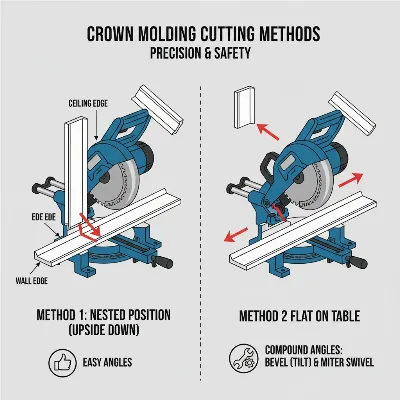 A graphic illustrating both nested and flat cutting methods for crown molding with a miter saw.
6. Miter Saw Maintenance and Cleaning
Regular maintenance is crucial for prolonging the life of your miter saw and ensuring it continues to deliver accurate, high-quality cuts. A well-maintained saw is a reliable saw.
Regular Cleaning Practices
After every use, take a few minutes to clean your miter saw. Dust and debris accumulate rapidly and can hinder performance and accuracy. Use a brush or compressed air to remove sawdust from the blade guard, table, fence, and motor vents. Pay particular attention to the area around the blade and miter gauge, where fine dust tends to settle. Wipe down all surfaces with a dry cloth to prevent buildup that could interfere with smooth operation or cooling. It’s also a good practice to carefully clean the teeth of your saw blade.
Lubrication and Inspection
Periodically, you should lubricate the moving parts of your miter saw. Apply a light machine oil to pivot points, the miter detent plate, and the slide rails (on sliding models). This ensures smooth movement and precise control; always wipe away any excess oil to prevent dust from adhering to sticky surfaces. Inspect the blade for sharpness and any signs of damage or dullness, replacing it if necessary. Regularly check the saw’s alignment and calibration to ensure your cuts remain accurate. Furthermore, inspect the power cord for any wear or damage and ensure all switches function correctly.
Proper Storage
When not in use, store your miter saw in a clean, dry environment protected from moisture and excessive dust. Covering the saw with a protective sheet or a dedicated case helps prevent dirt accumulation and safeguards the machine from accidental bumps. For professionals who transport their saw frequently, investing in a sturdy carrying system designed to minimize vibrations is advisable to reduce the risk of misalignment or component damage.
7. Where to Buy a Miter Saw for Crown Molding
When you’re ready to purchase a miter saw for your crown molding projects, you’ll find a wide array of options both online and in physical stores. Reputable retailers, such as major home improvement stores (e.g., Lowe’s, Home Depot) and specialized tool suppliers, are excellent places to start. Online marketplaces like Amazon also offer a vast selection, often with competitive pricing and detailed customer reviews.
Before making a purchase, always verify the retailer’s warranty and return policies. Buying from an authorized dealer ensures you receive genuine products and access to manufacturer support. Consider visiting a physical store to get a feel for the saw’s size, weight, and controls, especially for larger models, as ergonomics can significantly impact your user experience.
Conclusion
Successfully cutting and installing crown molding is a truly rewarding endeavor that can dramatically enhance the aesthetic appeal of any space. Investing in a high-quality miter saw, specifically a dual-bevel sliding compound model with appropriate blade size and precision features, transforms what might seem like a daunting task into a manageable and enjoyable project. By understanding the key factors in choosing the right tool, practicing safe and effective cutting techniques, and maintaining your equipment diligently, you are well-equipped to achieve professional-grade results.
Frequently Asked Questions
What type of miter saw is best for cutting crown molding?
A dual-bevel sliding compound miter saw is generally considered the best type for cutting crown molding. This saw allows the blade to tilt in both directions and slide, providing the versatility needed for complex compound angles and wider crown profiles.
What blade size is recommended for crown molding projects?
For most crown molding profiles, a 12-inch blade is highly recommended. This size provides sufficient cutting capacity, often up to 7.5 inches when nested, to handle a wide range of crown molding dimensions effectively.
What are the two main methods for cutting crown molding?
The two primary methods for cutting crown molding are nested (vertical) cutting and flat (compound) cutting. Nested cutting involves positioning the molding upside down against the fence and table, while flat cutting requires laying the molding flat and adjusting both miter and bevel angles.
Which safety gear should I use when operating a miter saw?
When operating a miter saw, always wear safety glasses to protect your eyes, ear protection to guard against noise, and a dust mask to minimize sawdust inhalation. Maintaining a clear workspace and firm grip on the material are also crucial for safety.
How often should I clean and maintain my miter saw?
You should clean your miter saw after every use to remove sawdust and debris. Periodically, lubricate moving parts like pivot points and slide rails, and inspect the blade for sharpness and the power cord for damage to ensure optimal performance and longevity.
How to Choose a Miter Saw for Crown Molding
Selecting the right miter saw for crown molding involves evaluating key features like blade size, motor power, and bevel capabilities to ensure precise and efficient cuts.
Assess the scope and complexity of your crown molding projects. Larger and wider crown profiles will require a miter saw with greater cutting depth and width, influencing your choice of blade size and saw type.
Opt for a 12-inch blade for most crown molding profiles, as it offers a nested capacity of up to 7.5 inches. This ensures sufficient clearance for wider crown pieces, making the saw more versatile for various projects.
Choose a dual-bevel sliding compound miter saw. The dual-bevel capability allows the blade to tilt both left and right, while the sliding mechanism extends cutting capacity for wider boards, simplifying complex angled cuts.
Seek saws with XPS LED cut line systems or laser guides for enhanced precision. Additionally, ensure the saw includes essential safety features such as a robust blade guard, an electric brake, and an effective dust collection system.
Consider reputable brands like DeWalt, Bosch, or Makita, which offer superior precision and durability. Balance your budget with the required features, viewing the miter saw as an investment in your woodworking craftsmanship.
Get our weekly buyer guide
Practical specs, not advice. Unsubscribe anytime.

As a DIYer, I was intimidated by crown molding, but understanding the importance of a good miter saw made all the difference. The explanation of how these saws handle intricate angled cuts was really helpful. My joints look professional now!
I picked up the Bosch GCM12SD after reading about its Axial-Glide mechanism. While it’s super smooth and accurate for most cuts, I found the dust collection to be a bit underwhelming when doing a lot of repetitive crown molding cuts. It’s a solid saw, but be prepared for some cleanup.
I’ve been looking for a good saw for trim work, and the mention of dual-bevel sliding compound models really helped me narrow it down. I ended up getting a different brand, but the 12-inch blade capacity is definitely key for wider crown pieces. My only minor complaint is that it’s a bit heavy to move around my small workshop.
I finally tackled my living room crown molding project thanks to the advice here. The DeWalt DWS780 was a game-changer. The XPS LED cut line system made aligning those tricky angles so much easier than I expected. Worth every penny for the precision and smooth cuts.