Choosing between a single bevel and a dual bevel miter saw depends on your project needs, budget, and desired efficiency. A single bevel miter saw tilts the blade in one direction, typically left, requiring manual flipping of the workpiece for opposing bevels. In contrast, a dual bevel miter saw tilts in both left and right directions, enabling symmetrical cuts without repositioning the material, which significantly streamlines complex tasks like crown molding installation. The dual bevel model offers greater versatility and time savings for intricate work, while single bevel saws are generally more affordable and suitable for basic cuts.
What is a Miter Saw?
A miter saw is a specialized power tool designed to make precise crosscuts and angled cuts, commonly known as miters and bevels, in a workpiece. It features a circular blade mounted on a pivoting arm that can be adjusted to various angles, making it indispensable for tasks like framing, trimming, and creating intricate joinery. This tool offers unparalleled speed and accuracy when cutting wood, and sometimes metal or plastic, at specific angles.
Miter saws primarily execute three types of cuts:
- Crosscuts: Straight cuts across the width of a board, typically at a 90-degree angle.
- Miter Cuts: Angled cuts made by rotating the saw’s table horizontally, often used for corner joints like those found in picture frames.
- Bevel Cuts: Angled cuts made by tilting the saw blade itself from the vertical plane, creating an angled edge on the material. These are common in crown molding and baseboard installations.
- Compound Cuts: A combination of both a miter cut and a bevel cut, essential for complex angles.
The main distinction among miter saws lies in their bevel cutting capability. This leads us to the two primary types: single bevel and dual bevel.
Single Bevel Miter Saws
A single bevel miter saw is designed to tilt the blade in only one direction, typically to the left. This allows you to create angled or beveled edges on one side of your material. For projects requiring a bevel cut on the opposite side, you must manually flip the workpiece over to make the corresponding cut. While seemingly a limitation, this straightforward design makes single bevel saws a popular and efficient choice for many common tasks.
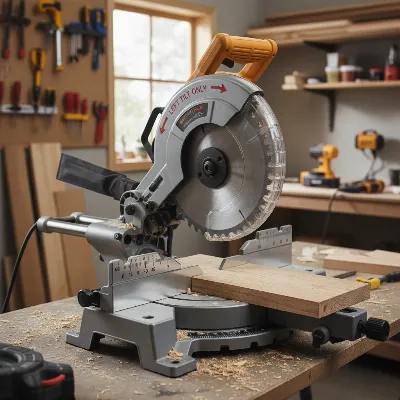 miter saw blade tilting to one side for angled cuts” />Single bevel miter saw blade tilting to one side for angled cuts
Dual Bevel Miter Saws
In contrast, a dual bevel miter saw, also known as a double bevel miter saw, offers the enhanced functionality of tilting its blade in both left and right directions. This critical feature allows you to execute opposing bevel cuts without the need to flip or reposition your workpiece. The ability to make symmetrical angled cuts effortlessly significantly streamlines the workflow, especially for complex and repetitive tasks. Dual bevel saws represent an upgrade in versatility and convenience for many woodworkers.
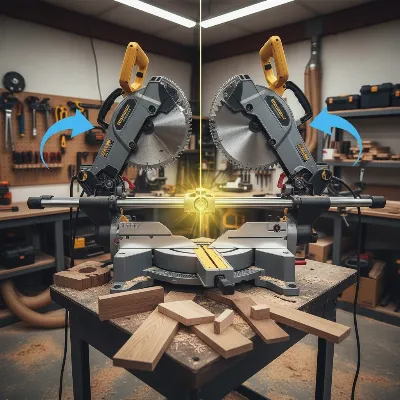 Dual bevel miter saw blade tilting in both directions for versatile cuts
How to Choose a Miter Saw That Fits Your Needs
Selecting the right miter saw involves evaluating several factors, particularly when deciding between a single and dual bevel model. Your choice should ultimately align with the type and complexity of projects you frequently undertake, as well as your budget and available workspace.
Determining Your Usage Needs
Before anything else, consider what you’ll be cutting. Are you primarily working on simple framing, basic trim, or occasional DIY repairs? A single bevel saw might be perfectly adequate. If your projects involve intricate crown molding, complex angled joinery for furniture, or repetitive symmetrical cuts on long pieces, a dual bevel saw will offer significant advantages in efficiency and accuracy. For those embarking on professional carpentry or detailed custom work, the added versatility of a dual bevel model is often invaluable.
Key Factors to Consider When Buying a Miter Saw
When comparing models, whether single or dual bevel, several specifications and features warrant close attention:
- Cutting Capacity and Size: This refers to the maximum width and thickness of material the saw can cut. Blade diameter (e.g., 10-inch or 12-inch) directly impacts cutting depth. Sliding miter saws, regardless of bevel type, extend the crosscut capacity for wider boards, a crucial feature for many users.
- Power and Speed: The motor’s power (measured in amps) and blade speed (RPM) determine how easily and cleanly the saw cuts through different materials. Higher power is generally preferred for denser woods or continuous use.
- Bevel and Miter Angles: All miter saws offer adjustable miter angles (horizontal rotation). The key differentiator is the bevel angle (vertical tilt). Single bevel saws tilt in one direction (e.g., 0-45 degrees left), while dual bevel saws tilt in both directions (e.g., 0-45 degrees left and 0-45 degrees right). Check the maximum angles to ensure they meet your project requirements.
- Laser System and LED Worklight: Many modern miter saws include a laser guide that projects the cut line onto the workpiece, enhancing precision and visibility. LED lights illuminate the cutting area, which is particularly useful in dimly lit workshops. While helpful, some experienced users still prefer manual marking.
- Safety Features: Essential for any power tool, look for features like a clear blade guard that automatically retracts, an electric brake to stop the blade quickly after the cut, and sturdy clamps to secure your workpiece.
- Brand and Price: Reputable brands often offer better build quality, durability, and customer support. Single bevel saws are typically more affordable, making them attractive for budget-conscious buyers. Dual bevel saws, with their increased complexity and versatility, come at a higher price point but can justify the investment for advanced users.
Comparing Single vs Dual Bevel Miter Saws
The choice between a single and dual bevel miter saw often boils down to a trade-off between cost, convenience, and versatility. While a single bevel saw can perform all the same cuts as a dual bevel model, the latter achieves them with greater efficiency.
| Feature | Single Bevel Miter Saw | Dual Bevel Miter Saw |
|---|---|---|
| Bevel Tilt Direction | One direction (usually left) | Both left and right |
| Workpiece Handling | Requires flipping the board for opposing bevels | No need to flip the board for opposing bevels |
| Time Efficiency | Less efficient for repetitive opposing bevels | Highly efficient, saves time on complex projects |
| Complexity of Cuts | Good for basic bevels, manageable for compound cuts | Excellent for complex and symmetrical compound cuts |
| Accuracy/Consistency | Higher chance of error due to repositioning | More consistent and precise due to fewer adjustments |
| Cost | Generally more affordable | More expensive |
| Portability/Weight | Lighter and more compact | Heavier and bulkier |
| Ideal User | Beginner, DIYer, occasional user, budget-conscious | Professional, dedicated hobbyist, frequent complex work |
The primary benefit of a dual bevel miter saw is the ability to make complementary angled cuts quickly and accurately without rotating the material. This is a game-changer for tasks like installing crown molding, where multiple pieces need precise, mirrored bevels. Flipping long, delicate pieces of wood can be cumbersome and risks damaging the material or misaligning the cut, making the dual bevel a significant advantage.
> “For anyone who tackles a lot of detailed interior finishing or needs to make mirrored angled cuts, a double bevel saw is a real game-changer. It’s about matching the tool’s capabilities to the demands of your work.” – John Foreman, Master Carpenter with 20+ years experience.
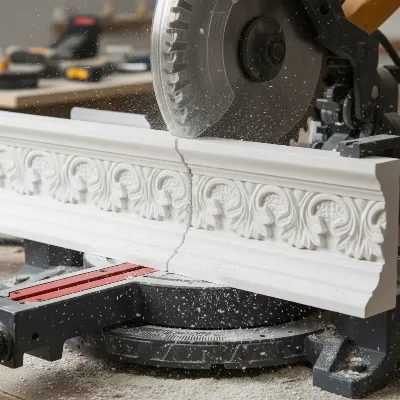 Precise crown molding cut using a miter saw’s bevel function
Top Miter Saw Considerations for 2026
While specific model recommendations can fluctuate, the core features that define a top-tier miter saw, whether single or dual bevel, remain consistent. For 2026, manufacturers continue to focus on enhanced precision, durability, and user-friendly designs.
What to Look for in High-Performing Miter Saws
- Motor Durability and Power: Modern saws feature robust brushless motors that offer extended lifespan and consistent power delivery, crucial for tackling hardwoods and sustained use. Look for models with at least 15 amps for reliable performance.
- Accuracy and Repeatability: Precision is paramount. High-quality saws will have crisp detents for common miter and bevel angles, along with easy-to-read scales and fine adjustment mechanisms. Some models incorporate digital displays for exact angle settings.
- Dust Collection Efficiency: An often-overlooked feature, effective dust collection significantly improves visibility, reduces cleanup, and promotes a healthier work environment. Look for saws with integrated dust bags and compatibility with shop vacs.
- Ergonomics and Portability: Even dual bevel saws are becoming more ergonomically designed. Comfortable handles, intuitive controls, and manageable weight (for single bevels) are key for prolonged use and transport.
- Cutting Capacity: Consider the maximum crosscut and vertical capacity. Sliding models offer extended crosscut capabilities, allowing you to cut wider shelving or decking.
Single Bevel Excellence
For those who prioritize value and simplicity, excellent single bevel miter saws offer robust performance for everyday tasks. They are often praised for their lighter weight, making them easier to move around the job site or store in a small workshop. While requiring the user to flip the workpiece for opposing bevels, their straightforward operation means less complexity and generally lower maintenance.
Dual Bevel Dominance
Professional woodworkers and serious hobbyists often gravitate towards dual bevel miter saws for their unmatched efficiency on complex projects. The ability to tilt the blade left and right without flipping material is a significant time-saver, particularly when installing crown molding, baseboards, or building intricate cabinetry. This convenience not only speeds up work but also reduces the potential for costly errors caused by inconsistent material repositioning.
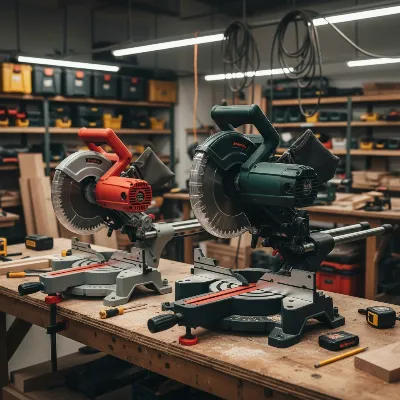 Comparison of a compact single bevel and a robust dual bevel miter saw
Safe and Effective Miter Saw Usage
Regardless of whether you choose a single or dual bevel model, safe operation is paramount. Miter saws are powerful tools that, when used improperly, can cause serious injury. Mastering basic techniques and adhering to safety protocols ensures both precision and protection.
Essential Safety Measures
- Read the Manual: Always begin by thoroughly understanding your specific saw’s manual, including its features and safety warnings.
- Wear PPE: Always wear appropriate personal protective equipment, including safety glasses, hearing protection, and a dust mask. Avoid loose clothing or jewelry that could get caught in moving parts.
- Secure the Workpiece: Always clamp or firmly hold your material against the fence and table before making a cut. Never attempt to freehand a cut on a miter saw.
- Clear the Area: Ensure the work area is clear of obstructions and bystanders. Give yourself ample space to maneuver long pieces of material.
- Keep Hands Clear: Always keep your hands a safe distance from the blade path, using push sticks or scrap wood if necessary to manipulate small pieces.
- Unplug When Changing Blades: Disconnect the saw from power before changing blades, making adjustments, or performing maintenance.
Basic Cutting Techniques
- Crosscuts: Position the material firmly against the fence. Ensure the blade is at 90 degrees (vertical and horizontal). Lower the blade slowly through the material.
- Miter Cuts: Adjust the saw table to the desired miter angle. Secure the material. Make the cut, allowing the blade to stop before raising it.
- Bevel Cuts (Single Bevel): Tilt the saw blade to the desired bevel angle (e.g., 45 degrees left). Secure the material. Make the cut. For an opposing bevel, you must flip the workpiece.
- Bevel Cuts (Dual Bevel): Tilt the saw blade to the desired bevel angle (left or right). Secure the material. Make the cut. To create an opposing bevel, simply tilt the blade to the opposite side without flipping the material.
- Compound Cuts: Set both the miter and bevel angles. Double-check your measurements, then make the cut. The dual bevel advantage here greatly simplifies matching angles.
Tips for Enhanced Efficiency
- Measure Twice, Cut Once: This age-old adage is especially true for miter saw work, where even a slight error can ruin a piece.
- Support Long Workpieces: Use outfeed supports or roller stands for long boards to prevent sagging, which can affect cut accuracy and safety.
- Practice with Scrap Wood: Before cutting your final material, practice complex cuts on scrap pieces to verify your settings and technique.
- Keep Blades Sharp: A sharp blade cuts more cleanly, reduces splintering, and is safer to use as it prevents kickback.
 Worker safely operating a miter saw with safety glasses
Maintenance and Cleaning for Longevity
Proper maintenance is crucial for ensuring your miter saw remains accurate, safe, and extends its lifespan, regardless of its bevel type. Regular cleaning and occasional tune-ups will keep your tool operating at its peak.
Routine Maintenance Steps
- Blade Inspection: Before each use, inspect the blade for sharpness, damage, or missing teeth. Replace dull or damaged blades promptly.
- Cleanliness: Sawdust and debris can clog moving parts and affect accuracy. After each use, unplug the saw and use a brush, compressed air, or a shop vacuum to clear sawdust from the motor vents, blade guard, fence, and table.
- Lubrication: Periodically apply a dry lubricant to the sliding rails (if applicable) and pivoting mechanisms according to the manufacturer’s recommendations. Avoid oily lubricants that can attract more dust.
- Check Fasteners: Regularly inspect all screws, bolts, and nuts for tightness. Vibrations from use can loosen them over time, affecting stability and accuracy.
- Carbon Brushes (for brushed motors): If your saw has a brushed motor, check the carbon brushes periodically for wear and replace them before they are completely depleted.
Proper Cleaning Techniques
- Unplug the Saw: Always disconnect power before cleaning to prevent accidental startup.
- Brush Away Loose Debris: Use a stiff brush to remove larger chunks of sawdust and wood chips from the table, fence, and blade area.
- Compressed Air: For hard-to-reach areas, compressed air can effectively blow out fine dust from motor vents and intricate mechanisms.
- Damp Cloth: Wipe down exterior surfaces with a slightly damp cloth. Avoid using harsh chemicals or solvents that could damage plastic components or painted finishes.
- Clean the Blade: Remove the blade and clean it using a specialized blade cleaner to dissolve pitch and resin buildup, which can cause the blade to drag and overheat.
By dedicating a few minutes to maintenance after each project, you can significantly prolong the life of your miter saw and ensure it’s always ready for your next task.
Where to Purchase Your Miter Saw
When you are ready to invest in a miter saw, it’s crucial to buy from reputable sources to ensure you receive a genuine product, good warranty, and reliable customer support.
Reputable Retailers and Online Stores
- Specialty Tool Stores: These stores often have knowledgeable staff who can provide expert advice and demonstrations. They typically carry a wide range of professional-grade tools.
- Large Home Improvement Chains: Stores like Home Depot, Lowe’s, or similar retailers offer a broad selection of miter saws from various brands, often at competitive prices. They are convenient for in-person viewing and immediate purchase.
- Online Retailers: E-commerce giants like Amazon, as well as official brand websites (e.g., DeWalt, Makita, Bosch, Ryobi, Milwaukee), provide vast selections and often have user reviews that can be very helpful. Ensure you buy from authorized sellers to guarantee warranty validity.
- Hardware Stores: Local hardware stores, while possibly having a smaller selection, can offer personalized service and support.
Considerations for Purchase
- Warranty: Always check the manufacturer’s warranty. Reputable brands typically offer several years of warranty coverage on their tools.
- Return Policy: Familiarize yourself with the retailer’s return policy in case you need to exchange or return the saw.
- Bundles and Sales: Keep an eye out for sales events or tool bundles that may include accessories like extra blades or stands, offering better overall value.
- Read Reviews: Before making a final decision, consult reviews from other users and independent testing sites to get real-world feedback on performance and reliability.
By choosing a reputable vendor, you can be confident in your purchase and enjoy years of reliable service from your new miter saw.
Conclusion
The decision between a single bevel and a dual bevel miter saw ultimately hinges on your specific needs, the complexity of your projects, and your budget. While a single bevel saw offers a more affordable and straightforward solution for basic crosscuts and simple bevels, the dual bevel model provides unparalleled efficiency and precision for intricate tasks like crown molding and repetitive symmetrical cuts. Professionals and dedicated hobbyists often find the time-saving benefits and enhanced versatility of a dual bevel saw to be a worthy investment, despite its higher cost and larger footprint.
As the world of woodworking continues to evolve, both single and dual bevel miter saws remain indispensable tools in any workshop. By carefully considering your project requirements, evaluating the key features, and prioritizing safety and maintenance, you can confidently select the miter saw that will empower you to achieve precise, high-quality results for all your cutting endeavors. Which type of miter saw will become the cornerstone of your workshop?
Frequently Asked Questions
What is the main benefit of a dual bevel miter saw over a single bevel?
The primary advantage of a dual bevel miter saw is its ability to tilt the blade in both left and right directions, allowing you to make opposing bevel cuts without flipping the workpiece. This saves significant time and effort, especially on projects requiring repetitive symmetrical angles like crown molding or intricate trim work.
Can a single bevel miter saw make compound cuts?
Yes, a single bevel miter saw can make compound cuts, which involve both a miter (horizontal angle) and a bevel (vertical tilt). However, if the project requires opposing bevel angles, you will need to manually flip the workpiece to achieve the second bevel cut, unlike with a dual bevel saw.
Are dual bevel miter saws significantly more expensive?
Generally, yes. Dual bevel miter saws are typically more expensive than single bevel models due to their added mechanical complexity and increased versatility. However, for professionals or serious hobbyists who frequently perform complex angled cuts, the investment often pays off in terms of time saved and improved accuracy.
Is a laser guide essential for a miter saw?
A laser guide is a helpful feature that projects the cut line onto your workpiece, aiding in alignment and increasing precision. While not strictly essential—many experienced woodworkers rely on pencil marks and careful alignment—it can significantly improve efficiency and accuracy, especially for beginners or when working in varying light conditions.
How important is the blade size when choosing a miter saw?
Blade size (commonly 10-inch or 12-inch) is very important as it dictates the maximum depth and crosscut capacity of the saw. A larger blade generally allows for cutting thicker and wider materials. Consider the typical dimensions of the lumber or material you will be working with most often when deciding on blade size.
Frequently Asked Questions
What is the main benefit of a dual bevel miter saw over a single bevel?
The primary advantage of a dual bevel miter saw is its ability to tilt the blade in both left and right directions, allowing you to make opposing bevel cuts without flipping the workpiece. This saves significant time and effort, especially on projects requiring repetitive symmetrical angles like crown molding or intricate trim work.
Can a single bevel miter saw make compound cuts?
Yes, a single bevel miter saw can make compound cuts, which involve both a miter (horizontal angle) and a bevel (vertical tilt). However, if the project requires opposing bevel angles, you will need to manually flip the workpiece to achieve the second bevel cut, unlike with a dual bevel saw.
Are dual bevel miter saws significantly more expensive?
Generally, yes. Dual bevel miter saws are typically more expensive than single bevel models due to their added mechanical complexity and increased versatility. However, for professionals or serious hobbyists who frequently perform complex angled cuts, the investment often pays off in terms of time saved and improved accuracy.
Is a laser guide essential for a miter saw?
A laser guide is a helpful feature that projects the cut line onto your workpiece, aiding in alignment and increasing precision. While not strictly essentialu2014many experienced woodworkers rely on pencil marks and careful alignmentu2014it can significantly improve efficiency and accuracy, especially for beginners or when working in varying light conditions.
How important is the blade size when choosing a miter saw?
Blade size (commonly 10-inch or 12-inch) is very important as it dictates the maximum depth and crosscut capacity of the saw. A larger blade generally allows for cutting thicker and wider materials. Consider the typical dimensions of the lumber or material you will be working with most often when deciding on blade size.
How to Choose a Miter Saw
Selecting the right miter saw involves evaluating your project needs, budget, and desired features to decide between a single or dual bevel model.
Consider the types of cuts you'll make. Simple framing or basic trim may only require a single bevel saw, while intricate crown molding or repetitive symmetrical cuts benefit from a dual bevel model for efficiency and accuracy.
Assess the maximum width and thickness of material the saw can cut, influenced by blade diameter (e.g., 10-inch or 12-inch). Look for motors with at least 15 amps for reliable performance, especially with denser woods.
All miter saws offer adjustable miter angles. Single bevel saws tilt in one direction (e.g., 0-45 degrees left), while dual bevel saws tilt in both directions (e.g., 0-45 degrees left and 0-45 degrees right). Ensure the maximum angles meet your project requirements.
Prioritize safety features like blade guards and electric brakes. Helpful additions include laser guides for precision and LED worklights for visibility. Also, consider the brand reputation and price point, as single bevel saws are generally more affordable.
Get our weekly buyer guide
Practical specs, not advice. Unsubscribe anytime.

I finally upgraded to a dual bevel miter saw after years of struggling with a single bevel. The difference for crown molding installation is night and day! Not having to flip the workpiece constantly saves so much time and frustration. It’s definitely worth the extra investment for anyone doing intricate trim work.
I picked up a dual bevel saw for a big deck project, hoping to speed things up. While the dual bevel feature is great for certain angles, I found the fence on my particular model wasn’t as robust as I’d hoped. It sometimes flexes a bit, which can affect the precision of those critical angled cuts. Still, it’s a decent tool for the price range.
I’m a DIYer and mostly do basic cuts for shelving and small furniture. My single bevel miter saw has been perfectly adequate for my needs, and it was much more affordable. I appreciate knowing the pros and cons of both types, but for my budget and project scope, the single bevel is still the best choice.
As someone who builds a lot of custom cabinets, the versatility of a dual bevel miter saw is essential. Being able to make symmetrical cuts without repositioning the material is a huge time-saver and makes my workflow so much smoother. It’s a game-changer for efficiency in the workshop.