The best sliding miter saws for woodworking offer unparalleled versatility and cutting capacity, making them indispensable for precision crosscuts, intricate miters, and smooth bevels on wide stock. Key models like the Bosch GCM12SD, DeWalt DWS780, and Makita LS1219L provide features such as axial-glide systems, XPS LED shadow lines, and direct-drive motors, ensuring accuracy and efficiency for both professional carpenters and dedicated DIY enthusiasts. These saws typically feature 15-amp motors and 10-inch or 12-inch blades, capable of crosscutting boards up to 16 inches wide.
This comprehensive guide explores the mechanics and advanced features of sliding miter saws, examine critical buying factors, compares top-rated machines, and provides essential advice on safe operation and maintenance. By understanding these aspects, you can make an informed decision to elevate the quality of your woodworking projects.
What Is a Miter Saw?
At its core, a miter saw is a specialized tool designed to make accurate angled cuts across the width of a workpiece. It consists of a circular saw blade mounted on a pivoting arm that can be adjusted to various angles, known as miter angles. This allows woodworkers to create precise corners and joints crucial for framing, trim work, and cabinetry.
Understanding the Different Types of Miter Saws
While the fundamental purpose remains the same, miter saws come in several configurations, each offering distinct capabilities:
- Standard Miter Saw: The most basic type, capable of making straight crosscuts and miter cuts by rotating the blade left or right. It does not tilt for bevel cuts.
- Compound Miter Saw: Building on the standard model, a compound miter saw can also tilt the blade to one side, allowing for bevel cuts. This feature is essential for tasks like crown molding, where cuts involve both a miter and a bevel. Some models offer dual-bevel capabilities, meaning they can tilt both left and right, eliminating the need to flip the workpiece for opposing angles.
- Sliding Compound Miter Saw: This is the most versatile type and the focus of our guide. A sliding compound miter saw incorporates a sliding rail system that allows the blade and motor assembly to move forward and backward. This significantly extends the saw’s crosscut capacity, enabling it to cut much wider boards than a non-sliding saw with the same blade diameter. Combine this with compound (miter and bevel) cutting abilities, and you have a powerhouse tool capable of handling a vast array of complex woodworking tasks.
The ability of a sliding miter saw to extend its reach makes it an invaluable asset for woodworkers tackling larger stock, such as wide shelving, decking, or intricate trim pieces. This expanded capacity, coupled with the precision inherent in miter saws, makes sliding models a popular choice for both professional carpenters and dedicated DIY enthusiasts.
How to Choose the Right Sliding Miter Saw for Woodworking
Selecting the ideal sliding miter saw requires careful consideration of your specific woodworking projects and operational needs. Investing in the right tool will not only enhance your work quality but also improve efficiency and safety in your workshop.
Determining Your Usage Needs
|
Our Picks for the Best Miter Saw in 2026
As an Amazon Associate I earn from qualifying purchases.
|
||
| Num | Product | Action |
|---|---|---|
| 1 | WEN MM0713 9.5-Amp 7.25-Inch Single Bevel Compact Sliding Compound Miter Saw with LED Cutline Guide, Black |

|
| 2 | Seesii Mini Circular Saw with Laser Guide,4.8A 4000 RPM Compact Corded Circular Saw with Rip Guide,3 Blades (4-1/2") for Wood,Soft Metal,Tile,Plastic Cutting,Max Cut Depth 1-11/16"(90°),1-1/8" (45°) |
|
| 3 | Olson Saw 35-241 Fine Kerf Saw 35-550 42 tpi with Aluminum Thin Slot Miter Box, Slot Size .014-Inch, Slot Angles 45, 60, 90, Cutting Depth 7/8-Inch, Pack of 1 |
|
| 4 | SKIL 3601-02 Flooring Saw with 36T Contractor Blade, Red and black |
|
| 5 | HAUTMEC 14 Inch Clamping Miter Box with Adjustable Jaw & 4 Anti-Slip Clamps, Heavy Duty ABS Mitre Saw Box with 22.5°, 45°, 90° Cutting Angles for Woodworking, Trim, Frames, DIY Projects – HTHDM25036 |
|
| 6 | Stanley 1-20-600 Saw Storage Miter Box with Saw, Black |
|
| 7 | WEN Universal Collapsible Miter Saw Stand, 350-Pound Capacity (MSA200) |
|
| 8 | Miter Saw Laser Guide - Miter and Portable Saw Laser Guide, Miter & Portable Saws |
|
| 9 | Metabo HPT 12-Inch Compound Miter Saw | Xact Cut LED Shadow Line System | Dual Bevel | C12FDHB |
|
| 10 | Makita LS0816F 8-1/2” Slide Compound Miter Saw |
|
Before diving into specifications, ask yourself: What kinds of projects will you primarily use the saw for? Are you installing crown molding, building large cabinet frames, cutting flooring, or crafting delicate joinery? Your answers will help determine the necessary cutting capacity, power, and specific features you should prioritize. For instance, if you frequently work with wide boards, a 12-inch sliding saw is beneficial. If portability is key, a lighter 10-inch or even an 8.5-inch compact sliding model might be more appropriate.
Key Factors to Consider When Buying a Sliding Miter Saw
When evaluating sliding miter saws, pay close attention to these critical aspects:
- Blade Size and Cutting Capacity: Miter saws typically come with 10-inch or 12-inch blades. While a 12-inch blade generally offers greater cutting depth and width, modern 10-inch sliding saws can often rival the crosscut capacity of their larger counterparts, often cutting boards up to 12 inches wide. The sliding mechanism is the primary factor in wide crosscut capacity, not just blade diameter. Consider the maximum width and thickness of the materials you’ll frequently cut.
- Motor Power and Speed: A powerful motor (measured in amps, typically 15 amps for professional models) ensures consistent performance and the ability to cut through dense hardwoods without bogging down. Higher RPM (revolutions per minute) blades provide smoother, cleaner cuts. Look for saws that maintain speed under load.
- Miter and Bevel Angles:
- Miter Range: The maximum angle the saw head can rotate (e.g., 50° to 60° left and right). Wider ranges offer more versatility for complex angles.
- Bevel Range: The maximum angle the blade can tilt (e.g., 45° or 48°). Dual-bevel saws are significantly more convenient as they tilt both left and right, saving time and effort by eliminating the need to flip large workpieces.
- Precision and Accuracy Features: Modern sliding miter saws often include features that enhance cutting accuracy. These can include:
- Laser Guides: Project a laser line onto the workpiece to indicate the cut line.
- LED Shadow Lines (XPS System): Utilize an LED light to cast a shadow of the blade onto the workpiece, providing a clear, adjustment-free cut line indication, often preferred over traditional lasers for its accuracy.
- Detent Systems: Positive stops at common miter and bevel angles for quick, repeatable, and accurate settings.
- Axial Glide System (Bosch): A unique arm system that replaces traditional rails, offering smooth cutting action and saving significant workspace by allowing the saw to be placed flush against a wall.
- Safety Features: Safety is paramount. Essential features include:
- Blade Guards: Clear guards that automatically retract during a cut and cover the blade when raised.
- Electric Brakes: Stop the blade quickly after the trigger is released, reducing coast-down time and increasing safety.
- Dust Collection Systems: Help keep the workspace clean and improve visibility. While often not perfect, good dust ports that can connect to a shop vac are beneficial.
- Material Clamps: Secure the workpiece firmly to the fence and table, preventing movement during the cut and reducing kickback risk.
- Brand and Price: Reputable brands like Bosch, DeWalt, Makita, and Milwaukee generally offer higher quality, better durability, and superior customer support. While these often come with a higher price tag, they are a long-term investment for professional woodworkers. Budget-friendly options from brands like Skil or Metabo HPT can offer excellent value for DIYers or those with less frequent use.
> “Choosing the right sliding miter saw transforms your capability. It’s not just about power; it’s about the precision, versatility, and efficiency it brings to every cut, allowing woodworkers to achieve truly professional results with less effort.” – Mark Johnson, Master Carpenter and Tool Reviewer
Comparison of Popular Sliding Miter Saws
To help you compare some of the leading sliding miter saws for woodworking, here’s a detailed table outlining key specifications and features of several top models.
| Feature | Bosch GCM12SD 12″ Axial-Glide | DeWalt DWS780 12″ Double Bevel | Makita LS1219L 12″ Dual-Bevel | Skil MS6305-00 10″ Dual Bevel | Milwaukee M18 FUEL 2734-20 10″ | DeWalt DWS779 12″ Sliding Compound |
|---|---|---|---|---|---|---|
| Blade Size | 12-inch | 12-inch | 12-inch | 10-inch | 10-inch | 12-inch |
| Motor | 15 Amp | 15 Amp | 15 Amp (Direct Drive) | 15 Amp | M18 FUEL (Cordless) | 15 Amp |
| Bevel Capacity | Dual 47° L/R | Dual 49° L/R | Dual 48° L/R | Dual 45° L/R | Dual 48° L/R | Dual 49° L/R |
| Miter Capacity | 52° L / 60° R | 50° L / 60° R | 60° L / 60° R | 47° L / 47° R | 50° L / 60° R | 50° L / 60° R |
| Crosscut Capacity | Up to 14 inches (90°) | Up to 16 inches (90°) | Up to 15 inches (90°) | Up to 12 inches (90°) | Up to 12 inches (90°) | Up to 16 inches (90°) |
| Cut Line Indicator | N/A (Axial-Glide precision) | XPS LED Shadow Line | Laser | LED Shadow Line | Shadow Line | N/A (No laser/LED) |
| Unique Feature | Axial-Glide System | XPS Cut Line, High Capacity | Direct Drive Motor, Smooth Glide | Affordable, LED Shadow Line | Cordless Portability, Power | Excellent Value, Robust |
| Weight | ~65 lbs | ~56 lbs | ~66 lbs | ~37 lbs | ~45 lbs (with battery) | ~56 lbs |
| Best For | Precision, Space-Saving | Professional, Heavy Use | Precision, Reliability | Budget-Conscious, DIY | Cordless Mobility | Value, Performance |
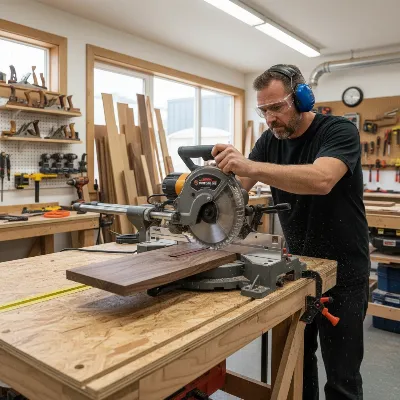 A woodworker precisely cutting a large wooden board with a sliding miter saw, sawdust in motion.
Top Sliding Miter Saws for Woodworkers Reviewed
Here’s a closer look at some of the best sliding miter saws that stand out for their performance, features, and overall value for woodworkers.
1. Bosch GCM12SD 12-Inch Dual-Bevel Axial-Glide Miter Saw
The Bosch GCM12SD is a premium choice, renowned for its innovative Axial-Glide System. This unique articulation replaces traditional sliding rails, providing incredibly smooth cutting action while saving significant workspace, allowing the saw to be placed flush against a wall. It delivers exceptional precision and durability.
- Pros: Unmatched smoothness and precision; space-saving design; robust construction; excellent cutting capacity for its class.
- Cons: Higher price point; heavier than some competitors, making it less portable.
- Key Features: Axial-Glide system, 15-amp motor, 14-inch horizontal cut capacity, 47° dual bevel, 52° left/60° right miter.
2. DeWalt DWS780 12-Inch Double Bevel Sliding Compound Miter Saw
A favorite among professionals, the DeWalt DWS780 consistently earns high marks for its accuracy, power, and job site durability. Its XPS cross-cut positioning system uses an LED light to cast a precise shadow of the blade onto the workpiece, eliminating calibration issues and enhancing accuracy.
- Pros: Extremely accurate XPS cut line system; robust and durable build; impressive 16-inch crosscut capacity; dual bevel.
- Cons: Dust collection can be improved; relatively high price.
- Key Features: XPS shadow line, 15-amp motor, 16-inch horizontal cut capacity, 49° dual bevel, 50° left/60° right miter.
3. Makita LS1219L 12″ Dual-Bevel Sliding Compound Miter Saw with Laser
Makita’s LS1219L is engineered for precision and ease of use, featuring a powerful 15-amp direct-drive motor that maintains constant speed and offers smooth, quiet operation compared to belt-driven models. Its unique two-steel rail sliding system is designed to provide dead-on accuracy.
- Pros: Highly precise cuts; reliable direct-drive motor; wide miter and bevel range; integrated laser guide.
- Cons: Can be heavy; some users report the laser can be difficult to see in bright light.
- Key Features: Direct-drive motor, 15-inch crosscut capacity, 48° dual bevel, 60° left/right miter, integrated laser.
4. Skil MS6305-00 10″ Dual Bevel Sliding Compound Miter Saw
For woodworkers seeking a balance between performance, features, and affordability, the Skil MS6305-00 is a compelling option. This 10-inch sliding saw offers dual-bevel capabilities and a convenient LED shadow line for accurate cuts, providing excellent value for its price.
- Pros: Excellent value for the money; LED shadow line for precision; dual bevel for versatility; lightweight and more portable.
- Cons: 10-inch blade might limit capacity for some very large projects compared to 12-inch saws; less robust build than professional-grade models.
- Key Features: 15-amp motor, 12-inch crosscut capacity, 45° dual bevel, 47° left/right miter, LED shadow line.
5. Milwaukee M18 FUEL 2734-20 10-Inch Sliding Compound Miter Saw (Cordless)
The Milwaukee M18 FUEL 2734-20 stands out as a top-tier cordless option, offering the power and precision typically found in corded models with the added convenience of portability. Its M18 FUEL technology delivers sustained power and runtime, making it ideal for job sites or workshops where power outlets are scarce.
- Pros: Cordless freedom and portability; impressive power for a battery-operated saw; precise shadow line indicator; integrated carry handles and wing extensions.
- Cons: Batteries and charger are sold separately (increasing initial cost); heavier with battery; limited continuous run time compared to corded.
- Key Features: M18 FUEL brushless motor, 12-inch crosscut capacity, 48° dual bevel, 50° left/60° right miter, shadow line.
6. DeWalt DWS779 12-Inch Sliding Compound Miter Saw
The DeWalt DWS779 is often considered the best value sliding miter saw, offering many of the same high-performance features as the DWS780 but at a more accessible price point. While it lacks the XPS LED light, its robust construction and wide cutting capacity make it a powerful tool for various woodworking tasks.
- Pros: Excellent value; same robust build and cutting capacity as DWS780; reliable and powerful.
- Cons: No integrated laser or LED cut line indicator; dust collection could be better.
- Key Features: 15-amp motor, 16-inch horizontal cut capacity, 49° dual bevel, 50° left/60° right miter.
Safe and Effective Use of Your Sliding Miter Saw
Working with any power tool demands respect and adherence to safety protocols. A miter saw, with its rapidly spinning blade, is no exception. Prioritizing safety not only prevents injuries but also leads to more accurate and efficient work.
Essential Safety Measures
- Always Wear Personal Protective Equipment (PPE): This includes safety glasses or goggles, hearing protection (earplugs or earmuffs), and a dust mask. If your hair is long, tie it back, and avoid loose-fitting clothing or jewelry that could get caught in moving parts.
- Inspect Your Saw Before Each Use: Check the blade for sharpness and damage, ensure all guards are in place and functioning correctly, and verify that the power cord (if corded) is free of defects.
- Maintain a Clean and Clear Workspace: Clutter can lead to accidents. Keep your work area free of scraps, tools, and tripping hazards. Ensure adequate lighting.
- Secure Your Workpiece: Never attempt freehand cuts. Always brace the material firmly against the fence and use clamps whenever possible, especially for smaller or irregularly shaped pieces. This prevents kickback and ensures a precise cut.
- Keep Hands Clear of the Blade: Maintain a safe distance, at least 6 inches, from the blade’s path. Use push sticks for smaller pieces if necessary.
- Allow the Blade to Reach Full Speed: Before making a cut, let the saw motor reach its maximum RPM. Engaging the blade slowly can cause kickback or uneven cuts.
- Maintain a Stable Stance: Stand balanced, with good footing, and do not overreach. Let the saw do the work; do not force it through the material.
- Unplug Before Adjustments or Maintenance: Always disconnect the power when changing blades, clearing jams, or making any adjustments to the saw.
Basic Cutting Techniques for Sliding Miter Saws
- Crosscuts: Position the workpiece against the fence. Pull the saw head out, start the motor, then slowly push the blade through the material.
- Miter Cuts: Adjust the saw table to the desired angle. Secure the workpiece and make the cut as you would a crosscut.
- Bevel Cuts: Tilt the saw blade to the required angle. Secure the workpiece, and then perform the cut.
- Compound Cuts: These combine a miter and a bevel. Set both the miter and bevel angles simultaneously. Take extra care to ensure the workpiece is firmly supported and clamped.
Tips and Tricks for Effective Use
- Use a Support Stand: For long workpieces, dedicated miter saw stands or auxiliary supports like rollers are invaluable for stability and consistent cuts.
- Practice with Scraps: Before cutting your final material, practice on scrap pieces to confirm settings and technique.
- Mark Your Cuts Clearly: Use a sharp pencil or marking knife for precise lines.
- Manage Dust: Connect your saw to a shop vacuum or dust extractor to minimize airborne dust and keep your cut line visible.
- Calibrate Regularly: Check your saw’s alignment and calibration periodically to ensure continued accuracy.
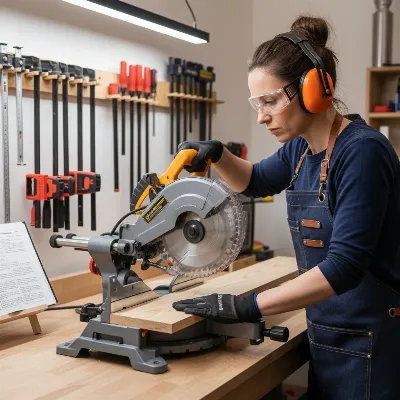 A woodworker wearing safety gear, demonstrating safe use of a sliding miter saw in a well-organized workshop.
Maintenance and Cleaning for Your Sliding Miter Saw
Regular maintenance and cleaning are crucial for extending the lifespan of your sliding miter saw, maintaining its precision, and ensuring safe operation. Neglecting these steps can lead to dull blades, motor strain, inaccurate cuts, and potential safety hazards.
Routine Maintenance Steps
- Clean After Every Use: Dust and wood chips can quickly accumulate and interfere with moving parts. Use a brush, compressed air, or a shop vacuum to clean the saw’s table, fence, blade guard, motor vents, and especially the sliding rails. Fine dust around the blade and miter gauge can cause friction and affect accuracy.
- Inspect and Replace the Blade: A sharp blade is essential for clean cuts and reduces strain on the motor. Regularly inspect your blade for dullness, missing teeth, or damage. Replace dull or damaged blades promptly. Use the correct type of blade (e.g., a high-tooth-count crosscut blade for fine woodworking).
- Lubricate Moving Parts: Apply a light machine oil or a manufacturer-recommended lubricant to the sliding rails and other pivot points. This ensures smooth operation and prevents rust. Avoid heavy greases that can attract dust and grime.
- Check Alignment and Calibration: Over time, the saw’s miter and bevel stops can shift. Periodically check these settings with a reliable square or protractor and recalibrate if necessary to maintain cutting accuracy.
- Maintain the Fence: Ensure the fence is clean, straight, and securely fastened. A misaligned or damaged fence will compromise cut precision.
- Keep the Dust Collection System Clear: A clogged dust port or bag reduces efficiency and can lead to dust buildup within the saw’s components. Regularly empty dust bags and clear any blockages.
- Inspect Power Cord and Switches: For corded saws, check the power cord for any fraying or damage. Ensure the power switch functions correctly and that any electric brake engages properly.
Proper Storage
When not in use, store your miter saw in a dry, clean environment. If it’s a portable model, ensure it’s secured in transit to prevent damage. Covering it with a dust cover can protect it from ambient dust and moisture.
Where to Buy Sliding Miter Saws
When you’re ready to purchase a sliding miter saw, it’s essential to buy from reputable sources to ensure you receive a genuine product with full warranty support.
- Major Home Improvement Retailers: Stores like Lowe’s, The Home Depot, and Menards typically carry a wide selection of popular brands such as DeWalt, Bosch, Makita, and Skil. They often have saws on display, allowing you to physically inspect them.
- Online Retailers: Amazon, Acme Tools, ToolBarn, and the official websites of manufacturers offer extensive selections, competitive pricing, and user reviews. Be sure to check seller reputation and return policies.
- Specialty Tool Stores: Local and online woodworking or professional tool suppliers often provide expert advice and may carry a broader range of high-end or specialized models, including brands like Festool.
Before making a purchase, compare prices, check customer reviews, and consider any ongoing sales or promotions. Also, factor in delivery costs and the convenience of local pickup versus online shipping.
Conclusion
The sliding miter saw is an indispensable tool for any woodworker serious about precision and versatility. Its ability to make wide, accurate crosscuts, coupled with compound miter and bevel capabilities, unlocks a vast range of project possibilities—from intricate joinery to robust framing. By carefully considering factors such as blade size, motor power, precision features like LED shadow lines, and essential safety measures, you can select a saw that not only meets your current needs but also supports your growth as a woodworker. Regular maintenance and adherence to safe operating practices will ensure your investment continues to deliver exceptional performance for years to come.
Ready to improve your craftsmanship? Choosing the right sliding miter saw is the first step towards achieving professional-grade results with confidence and efficiency. Which feature will be the deciding factor for your next miter saw purchase?
Frequently Asked Questions
What is the main advantage of a sliding miter saw over a standard miter saw?
The main advantage of a sliding miter saw is its extended crosscut capacity, allowing it to cut much wider boards than a standard miter saw with the same blade diameter. This is achieved through a sliding rail system that moves the blade assembly forward and backward, enabling cuts up to 16 inches wide on some models.
What blade sizes are common for sliding miter saws?
Sliding miter saws commonly use 10-inch or 12-inch blades. While 12-inch blades generally offer greater depth and width capacity, many modern 10-inch sliding saws can still cut boards up to 12 inches wide due to their sliding mechanism.
What are key safety features to look for in a sliding miter saw?
Essential safety features include clear blade guards that retract automatically, electric brakes to stop the blade quickly, effective dust collection systems, and material clamps to secure workpieces. Always wear personal protective equipment (PPE) like safety glasses and hearing protection when operating the saw.
How often should I clean and maintain my sliding miter saw?
You should clean your sliding miter saw after every use to prevent dust and wood chips from interfering with moving parts. Regular maintenance, including inspecting and replacing dull blades, lubricating sliding rails, and checking alignment, should be done periodically to ensure precision and safe operation.
Which brands offer the best sliding miter saws for professional use?
Reputable brands like Bosch, DeWalt, and Makita are highly regarded for their professional-grade sliding miter saws, offering superior quality, durability, and customer support. Models such as the Bosch GCM12SD and DeWalt DWS780 are popular choices among professionals.
How to Choose a Sliding Miter Saw for Woodworking
Selecting the right sliding miter saw involves evaluating your project needs and key features like blade size, motor power, and precision systems to enhance your woodworking quality and efficiency.
Identify the primary types of projects you'll undertake, such as crown molding, cabinet frames, or flooring. This helps determine the necessary cutting capacity, power, and specific features to prioritize. For example, a 12-inch saw is better for wide boards, while a 10-inch model offers more portability.
Consider whether a 10-inch or 12-inch blade is appropriate for the maximum width and thickness of materials you frequently cut. The sliding mechanism is crucial for wide crosscut capacity, with some 10-inch saws matching the capacity of larger 12-inch models.
Look for a powerful 15-amp motor for consistent performance through dense hardwoods and higher RPM for smoother cuts. Precision features like LED shadow lines (XPS System) or Bosch's Axial-Glide System enhance accuracy and ease of use, often preferred over traditional laser guides.
Ensure the saw includes essential safety features such as clear blade guards, electric brakes, and effective dust collection systems. Material clamps are also vital for securing workpieces and preventing kickback, contributing to a safer workshop environment.
Reputable brands like Bosch, DeWalt, and Makita offer higher quality and durability, making them a long-term investment. Budget-friendly options from brands like Skil can provide excellent value for DIYers, so compare prices and reviews before purchasing.
Get our weekly buyer guide
Practical specs, not advice. Unsubscribe anytime.

I got the Bosch GCM12SD because I heard great things about the axial-glide system. While it’s super smooth and accurate for most cuts, I found it takes up a bit more bench space than I anticipated in my small workshop. It’s a powerful saw, but that footprint is something to consider if you’re tight on space. Still, the precision is hard to beat.
I picked up a 12-inch sliding miter saw, not one of the specific brands mentioned, but it has a 15-amp motor and it’s been fantastic for my furniture projects. The ability to crosscut boards up to 16 inches wide is incredibly useful. My only minor complaint is that the dust collection could be a bit better, but overall, I’m very happy with its performance.
As a dedicated DIY enthusiast, I needed a saw that could handle both precision crosscuts and smooth bevels. My new sliding miter saw, a 10-inch model, has been perfect for all my home renovation tasks. The direct-drive motor is really powerful and I appreciate how quiet it is compared to my old saw. It’s made a huge difference in the quality of my work.
I finally upgraded to the DeWalt DWS780 after years of using a basic miter saw, and wow, what a difference! The XPS LED shadow line system is a game-changer for accuracy, especially when I’m working on intricate trim pieces. It handles wide stock with ease, making my deck building project so much smoother. Definitely worth the investment for serious DIYers.