A miter saw blade guard that is stuck can be unjammed quickly and safely by first unplugging the saw and wearing protective gear, then systematically inspecting for and removing debris, lubricating moving parts, and checking for bent components or spring issues. The most common causes for a stuck guard include sawdust buildup, wood scraps, bent parts, spring problems, engaged locking mechanisms, and resin accumulation. Addressing these issues ensures the saw is safe and functional for woodworking and DIY projects.
Why Does Your Miter Saw Blade Guard Get Stuck? Common Causes
Understanding the root cause of a stuck blade guard is the first step toward a quick and effective fix. Several factors can hinder the smooth operation of this essential safety component. Identifying the specific issue will save you time and prevent further damage to your valuable tool.
Dust and Debris Buildup
The most frequent culprit behind a sluggish or stuck blade guard is the accumulation of sawdust, wood chips, and other debris. Over time, fine particles can pack into the pivot points, bearings, and intricate mechanisms that allow the guard to move. This buildup creates friction and effectively clogs the system, preventing the guard from retracting properly as the saw head is lowered. For miter saws buying guides on this site.
Obstructions (Wood Scraps)
Sometimes, larger pieces of wood or offcuts can get lodged within the blade guard assembly, especially after a cut. These obstructions act as physical barriers, preventing the guard from moving through its full range of motion. They might be difficult to spot without a thorough inspection.
Bent or Damaged Components
Accidents happen in any workshop. A dropped saw, a workpiece kickback, or even rough handling during transport can bend or damage the delicate linkage, levers, or the guard itself. Even a slight deformation can cause the guard to bind against other parts of the saw, leading to a complete jam.
Spring Issues
The blade guard relies on a spring mechanism to retract and extend smoothly. If this spring becomes damaged, stretched, loses tension, or completely breaks, the guard will no longer function automatically. A missing or faulty spring is a common mechanical issue that prevents the guard from operating as intended.
Engaged Locking Mechanisms
Some miter saws feature a locking mechanism for the blade guard, often used for transport or specific cutting setups. It’s possible for this locking lever to accidentally engage or become jammed in the locked position, leading to the impression that the guard is stuck. Always check your saw’s specific features.
Resin and Sap Buildup
|
Our Picks for the Best Miter Saw in 2026
As an Amazon Associate I earn from qualifying purchases.
|
||
| Num | Product | Action |
|---|---|---|
| 1 | Olson Saw 35-241 Fine Kerf Saw 35-550 42 tpi with Aluminum Thin Slot Miter Box, Slot Size .014-Inch, Slot Angles 45, 60, 90, Cutting Depth 7/8-Inch, Pack of 1 |

|
| 2 | Stanley 1-20-600 Saw Storage Miter Box with Saw, Black |
|
| 3 | HAUTMEC 14 Inch Clamping Miter Box with Adjustable Jaw & 4 Anti-Slip Clamps, Heavy Duty ABS Mitre Saw Box with 22.5°, 45°, 90° Cutting Angles for Woodworking, Trim, Frames, DIY Projects – HTHDM25036 |
|
| 4 | Metabo HPT 12-Inch Compound Miter Saw | Xact Cut LED Shadow Line System | Dual Bevel | C12FDHB |
|
| 5 | WEN MM0713 9.5-Amp 7.25-Inch Single Bevel Compact Sliding Compound Miter Saw with LED Cutline Guide, Black |
|
| 6 | Miter Saw Laser Guide - Miter and Portable Saw Laser Guide, Miter & Portable Saws |
|
| 7 | Seesii Mini Circular Saw with Laser Guide,4.8A 4000 RPM Compact Corded Circular Saw with Rip Guide,3 Blades (4-1/2") for Wood,Soft Metal,Tile,Plastic Cutting,Max Cut Depth 1-11/16"(90°),1-1/8" (45°) |
|
| 8 | SKIL 3601-02 Flooring Saw with 36T Contractor Blade, Red and black |
|
| 9 | WEN Universal Collapsible Miter Saw Stand, 350-Pound Capacity (MSA200) |
|
| 10 | Makita LS0816F 8-1/2” Slide Compound Miter Saw |
|
For those who frequently cut resinous or sappy woods, a sticky residue can accumulate on the blade, the guard, and the internal components. This sticky film can drastically increase friction, making the guard feel “stuck” or requiring excessive force to move. Regular cleaning is crucial to prevent this.
Essential Safety Precautions Before You Begin
Before you attempt any inspection or repair on your miter saw, prioritizing safety is paramount. Power tools, even when seemingly dormant, can pose significant hazards. Taking these precautions will protect you from accidental injury.
Always Unplug the Saw
This is the golden rule for any power tool maintenance. Never work on your miter saw without first disconnecting it from its power source. Unplugging ensures that the saw cannot accidentally start, preventing severe cuts or other injuries from the spinning blade. Even a battery-powered saw should have its battery removed.
Wear Protective Gear
When inspecting or working with power tools, always protect yourself. Don appropriate personal protective equipment, including safety glasses or goggles to shield your eyes from debris, and sturdy gloves to protect your hands from sharp edges or potential slivers.
Understand Your Saw’s Mechanics
Familiarize yourself with your specific miter saw’s design. Consult your owner’s manual for an exploded view of the blade guard assembly and its components. Knowing how the guard is supposed to operate will help you diagnose the problem more accurately and safely. Do not attempt to force parts if you are unsure of their intended movement.
Step-by-Step Guide to Unjamming Your Miter Saw Blade Guard
Once you’ve safely prepared your workspace and yourself, you can systematically work through these steps to identify and resolve the issue with your stuck blade guard. Start with the simplest solutions and progressively move to more involved repairs.
Initial Inspection (Visual Check, Manual Movement)
With the saw unplugged, begin with a thorough visual inspection. Use a bright flashlight to peer into the blade guard assembly. Look for any obvious foreign objects, loose screws, or bent parts. Gently try to move the blade guard by hand. Push it back and forth, up and down, to see if there’s any play or if you can feel where the resistance is coming from. Sometimes, simply working it manually can dislodge small debris.
Cleaning for Debris
If your initial inspection reveals a buildup of sawdust or small wood chips, a good cleaning is in order.
- Compressed Air: Use an air compressor with a nozzle to blow out accumulated dust and debris from all crevices, especially around the pivot points, hinges, and the main housing of the guard. Pay close attention to the area where the guard rotates and any linkage mechanisms.
- Brush: For stubborn, caked-on dust, use a stiff brush or an old toothbrush to scrub away the grime.
- Vacuum: A shop vacuum can also be effective at suctioning out loose debris.
Addressing Persistent Obstructions
If you spot a larger piece of wood or other material firmly lodged within the guard mechanism, carefully remove it.
- Pry with a Screwdriver: Use a screwdriver or a similar sturdy, non-marring tool to gently pry out the obstruction. Be cautious not to damage any plastic or metal components of the saw.
- Never Force It: Avoid using excessive force, as this could bend or break parts, turning a minor blockage into a major repair.
Lubricating Moving Parts
After cleaning, lubrication can restore smooth movement.
- Apply Light Oil: Use a light machine oil or a lubricant specifically recommended by your saw’s manufacturer. Apply a small amount to the pivot points, hinges, and any visible linkage that facilitates the guard’s movement.
- Work it In: Manually operate the blade guard several times to distribute the lubricant evenly and help it penetrate tight spaces. This can significantly reduce friction and free up a stiff guard. Avoid oversaturating with lubricant, as it can attract more dust.
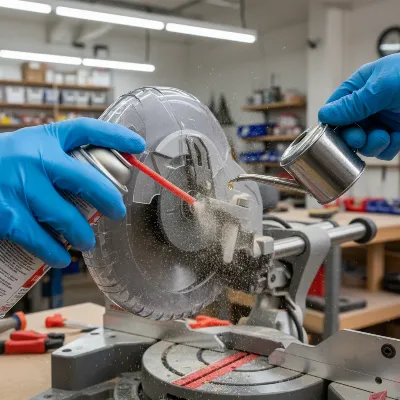 A close-up of a miter saw blade guard being cleaned and lubricated by a hand with safety gloves, showing compressed air blowing dust and a drop of oil applied to a pivot point.
Inspecting for Bent or Damaged Linkage and Springs
If cleaning and lubrication don’t solve the issue, more detailed inspection of the mechanical components is necessary.
- Examine Linkage and Levers: Carefully inspect all connecting rods, levers, and the guard itself for any signs of bending, cracks, or chips. Even a slight bend can cause significant binding. If a part is bent, you might be able to gently straighten it with pliers, but be careful not to overstress the material.
- Check Springs: Locate the spring(s) responsible for the guard’s retraction. Look for signs of damage, corrosion, or if the spring has become detached. A damaged spring often needs replacement. Some springs might just need to be re-seated or re-tensioned (wound) if they have slipped out of their correct position, which is a common fix for many models.
Checking Fasteners and Assembly
Loose or missing fasteners can cause misalignment and prevent proper guard function.
- Tighten Screws: Inspect all screws, nuts, and bolts holding the blade guard assembly together. Ensure they are snug but do not overtighten, especially on plastic components.
- Verify Washers and Spacers: Make sure all washers and spacers are in their correct positions. Sometimes, a missing washer can create enough play or binding to jam the guard. Refer to your saw’s manual for an exploded diagram to confirm all parts are present and correctly assembled.
Preventative Maintenance: Keeping Your Blade Guard Free
An ounce of prevention is worth a pound of cure, especially with miter saw maintenance. Regular care not only keeps your blade guard functioning flawlessly but also extends the overall lifespan and safety of your saw.
Routine Cleaning After Every Use
Make it a habit to clean your miter saw after each use. A quick wipe-down with a cloth and a blast of compressed air around the blade guard area will prevent sawdust and debris from accumulating and hardening. This simple step is the most effective way to avoid future jams.
Regular Lubrication Schedule
Establish a periodic lubrication schedule, perhaps once a month or every few weeks, depending on your saw’s usage. A few drops of appropriate lubricant on the moving parts will keep the guard operating smoothly and prevent corrosion. Be mindful not to over-lubricate, as excessive oil can attract more dust.
Pre-Use Inspections
Before every cutting session, perform a quick check of your blade guard. Ensure it moves freely, retracts fully, and covers the blade when the saw head is raised. This quick inspection takes mere seconds but can prevent accidents and identify potential issues before they become major problems.
> “A properly functioning blade guard is non-negotiable for miter saw safety. Regular cleaning and lubrication are not just maintenance tasks; they are essential safety practices.” – John Doe, Master Carpenter & Tool Expert
Proper Storage
When not in use, store your miter saw in a clean, dry environment. If you transport it, ensure the blade guard is protected from impacts. Using a dust cover can also prevent airborne particles from settling into the mechanisms, helping to keep it clean between uses.
When to Call a Professional
While many blade guard issues can be resolved with DIY maintenance, there are times when professional intervention is the safest and most practical option. Knowing when to seek expert help can save you from further damage or personal injury.
Complex Mechanical Failures
If you’ve inspected thoroughly and identified a bent internal component that you can’t straighten, a broken part that needs replacement, or an issue that requires significant disassembly, it might be best to consult a professional. Attempting complex repairs without the right tools or expertise can lead to irreversible damage.
Unidentified Issues
If you’ve followed all troubleshooting steps and the blade guard remains stuck, or you can’t identify the cause, a qualified service technician will have the experience and diagnostic tools to pinpoint the problem. They can safely access internal components and perform repairs that are beyond the scope of general users.
Warranty Concerns
If your miter saw is still under warranty, attempting extensive repairs yourself could void it. In such cases, contact the manufacturer’s authorized service center. They can provide covered repairs and ensure your saw retains its warranty.
Conclusion
A stuck miter saw blade guard is more than an inconvenience; it’s a critical safety concern that demands immediate attention. By systematically troubleshooting the common causes—from sawdust buildup and obstructions to bent components and spring issues—you can often quickly restore your guard’s functionality. The cornerstone of a well-functioning and safe miter saw lies in diligent preventative maintenance, including routine cleaning, lubrication, and pre-use inspections. While many problems are solvable at home, recognizing when to call in a professional ensures the longevity of your tool and, most importantly, your safety. What steps will you integrate into your routine to ensure your miter saw’s blade guard always operates smoothly?
Frequently Asked Questions
Frequently Asked Questions
Can I operate my miter saw if the blade guard is only partially stuck?
No, it is highly unsafe to operate a miter saw with a partially stuck blade guard. The guard is a crucial safety feature designed to protect you from the spinning blade, and even slight inhibition compromises your safety and increases the risk of serious injury.
How often should I lubricate my miter saw's blade guard mechanism?
For regular users, lubricating the pivot points and linkages every few weeks or once a month is a good practice. If you use your saw infrequently, a few times a year might suffice. Always use a light machine oil or a lubricant recommended by the manufacturer.
What kind of lubricant is best for a miter saw blade guard?
For lubricating your miter saw blade guard, a light machine oil or a dry lubricant that doesn't attract dust is generally recommended. Avoid heavy greases or WD-40 if it's not specifically designed as a lubricant, as these can attract sawdust and worsen the problem. Always check your saw's manual for manufacturer-specific recommendations.
Is it normal for the blade guard to collect a lot of sawdust?
Yes, it's normal for sawdust to collect around the blade guard and its mechanisms, especially when making many cuts. This is precisely why routine cleaning is so important. Regular removal of this buildup prevents it from hardening and causing the guard to stick.
How can I prevent resin buildup on my blade guard and blade?
To prevent resin and sap buildup, regularly clean your blade and guard with a specialized resin remover or a mild solvent like paint thinner or rubbing alcohol (after removing the blade and ensuring proper ventilation). Consider using blades designed for cutting resinous woods, which often have anti-stick coatings.
How to Unjam a Miter Saw Blade Guard
Follow these steps to safely unjam a stuck miter saw blade guard, addressing common issues like debris, obstructions, and lubrication needs.
Unplug the saw and use a flashlight to visually inspect the blade guard assembly for foreign objects or bent parts. Gently try to move the guard by hand to identify resistance points, as manual manipulation can sometimes dislodge small debris.
Use compressed air to blow out sawdust from pivot points and crevices. For stubborn grime, scrub with a stiff brush or old toothbrush, and use a shop vacuum to remove loose debris. This step is crucial for restoring smooth movement.
If larger wood pieces are lodged, carefully pry them out with a screwdriver or a non-marring tool. Avoid excessive force to prevent damaging plastic or metal components, which could turn a minor blockage into a major repair.
Apply a small amount of light machine oil or manufacturer-recommended lubricant to pivot points and hinges after cleaning. Manually operate the guard several times to distribute the lubricant evenly, reducing friction and freeing up stiff parts. Do not oversaturate.
If the guard remains stuck, examine connecting rods, levers, and the guard itself for bends or cracks. Check the retraction spring(s) for damage, corrosion, or detachment; they may need re-seating, re-tensioning, or replacement. Also, verify all fasteners are snug and washers are correctly positioned.
Get our weekly buyer guide
Practical specs, not advice. Unsubscribe anytime.

I had my blade guard stuck on my DeWalt miter saw for weeks and couldn’t figure it out. The tip about checking for resin accumulation was a game-changer! A little cleaner and it’s moving smoothly again. So glad I didn’t have to take it to a repair shop.
My old Craftsman miter saw has been giving me trouble with the guard sticking. I never thought about lubricating the moving parts, but that made a huge difference. It’s operating like new again, and I can finally get back to my woodworking projects without frustration.
Good advice overall, especially the safety reminders. My issue was a bent component, which wasn’t as easy to fix as just clearing out sawdust. I wish there was a bit more detail on how to identify and potentially straighten minor bends without damaging the saw further. Still, it got me thinking in the right direction.
This was super helpful! My Ryobi miter saw’s guard was jammed, and I suspected it was sawdust buildup. Following the steps to unplug and inspect for debris worked perfectly. It’s back to normal, and I feel much safer using it for my DIY projects now.