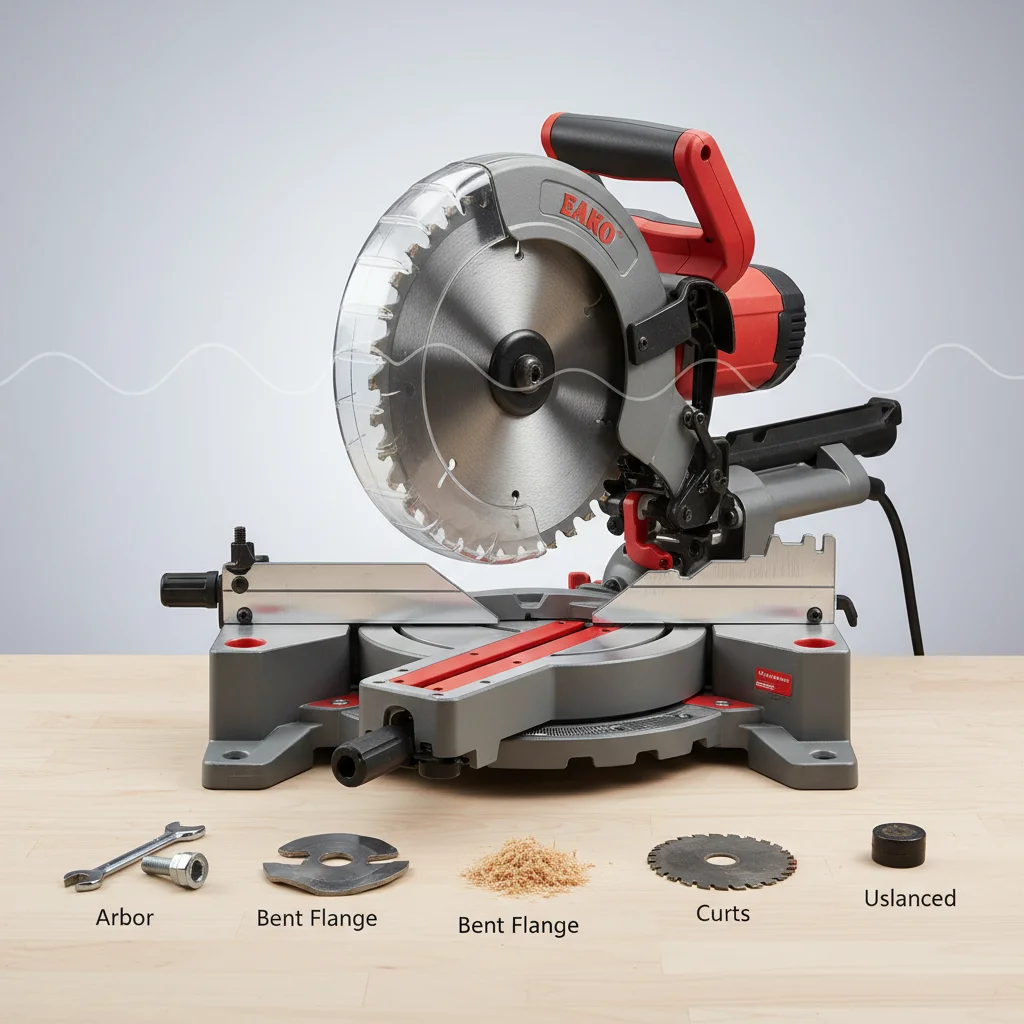
A wobbly miter saw blade can turn a precise cut into a frustrating mess, leading to inaccurate angles and even dangerous kickbacks. There are typically five main reasons why your miter saw blade might be wobbling: a loose arbor nut, a bent blade, a dirty arbor or flange, worn arbor bearings, or an issue with the saw’s motor shaft. Addressing these issues promptly is crucial for both the quality of your work and your safety in the workshop.
Loose Arbor Nut: The Most Common Culprit
The arbor nut is designed to secure the blade firmly to the saw’s arbor. If this nut isn’t tightened sufficiently, the blade will inevitably wobble during operation. Before every use, especially after changing a blade, always double-check that the arbor nut is snug. Use the appropriate wrench provided with your saw and ensure it’s tightened securely, but avoid over-tightening, which can strip threads or damage the blade.
Bent or Damaged Blade: A Hidden Hazard
Even a slight bend or warp in your miter saw blade can cause significant wobble. This can happen if the blade hits a hard object, is dropped, or is subjected to excessive force during a cut. To check for a bent blade, remove it from the saw and lay it on a flat surface. Rotate it slowly and look for any gaps or unevenness. A bent blade cannot be straightened effectively and should be replaced immediately.
Dirty Arbor or Flange: Impeding a Flush Fit
|
Our Picks for the Best Miter Saw in 2026
As an Amazon Associate I earn from qualifying purchases.
|
||
| Num | Product | Action |
|---|---|---|
| 1 | HAUTMEC 14 Inch Clamping Miter Box with Adjustable Jaw & 4 Anti-Slip Clamps, Heavy Duty ABS Mitre Saw Box with 22.5°, 45°, 90° Cutting Angles for Woodworking, Trim, Frames, DIY Projects – HTHDM25036 |

|
| 2 | Stanley 1-20-600 Saw Storage Miter Box with Saw, Black |
|
| 3 | Makita LS0816F 8-1/2” Slide Compound Miter Saw |
|
| 4 | Olson Saw 35-241 Fine Kerf Saw 35-550 42 tpi with Aluminum Thin Slot Miter Box, Slot Size .014-Inch, Slot Angles 45, 60, 90, Cutting Depth 7/8-Inch, Pack of 1 |
|
| 5 | Seesii Mini Circular Saw with Laser Guide,4.8A 4000 RPM Compact Corded Circular Saw with Rip Guide,3 Blades (4-1/2") for Wood,Soft Metal,Tile,Plastic Cutting,Max Cut Depth 1-11/16"(90°),1-1/8" (45°) |
|
| 6 | WEN MM0713 9.5-Amp 7.25-Inch Single Bevel Compact Sliding Compound Miter Saw with LED Cutline Guide, Black |
|
| 7 | Metabo HPT 12-Inch Compound Miter Saw | Xact Cut LED Shadow Line System | Dual Bevel | C12FDHB |
|
| 8 | SKIL 3601-02 Flooring Saw with 36T Contractor Blade, Red and black |
|
| 9 | WEN Universal Collapsible Miter Saw Stand, 350-Pound Capacity (MSA200) |
|
| 10 | Miter Saw Laser Guide - Miter and Portable Saw Laser Guide, Miter & Portable Saws |
|
Accumulated sawdust, resin, or other debris on the saw’s arbor or the blade flanges can prevent the blade from seating flush against the saw. This tiny obstruction can create an uneven surface, leading to wobble. Regularly clean the arbor and both inner and outer flanges with a brush and a suitable cleaner. Ensure all surfaces are perfectly clean and smooth before mounting a new blade.
Worn Arbor Bearings: A Deeper Mechanical Issue
Inside your miter saw, the arbor is supported by bearings that allow it to spin smoothly. Over time, these bearings can wear out, leading to play or looseness in the arbor itself, which translates to blade wobble. If you’ve checked the nut, blade, and cleanliness, and the wobble persists, worn arbor bearings are a strong possibility. You can often test this by trying to wiggle the arbor by hand when the blade is removed; any significant play indicates worn bearings. Replacing arbor bearings is a more involved repair, often requiring disassembly of the saw’s head. If you’re not comfortable with this, it’s best to consult a professional.
Motor Shaft Problems: The Least Common, Most Serious
In rare cases, the wobble might originate from an issue with the motor shaft itself, such as a bent shaft or worn motor bearings. This is a more serious mechanical problem and typically requires professional repair or replacement of the saw. Symptoms might include excessive vibration throughout the saw, unusual noises, or a wobble that persists even with a new blade and perfectly clean components.
- Always unplug your miter saw before performing any maintenance or blade changes.
- Wear appropriate safety gear, including eye protection and gloves.
- Use only blades that are the correct size and type for your miter saw.
- Regularly inspect your saw for any signs of wear or damage.
- Keep your workshop clean to prevent debris from affecting saw performance.
Get our weekly buyer guide
Practical specs, not advice. Unsubscribe anytime.
