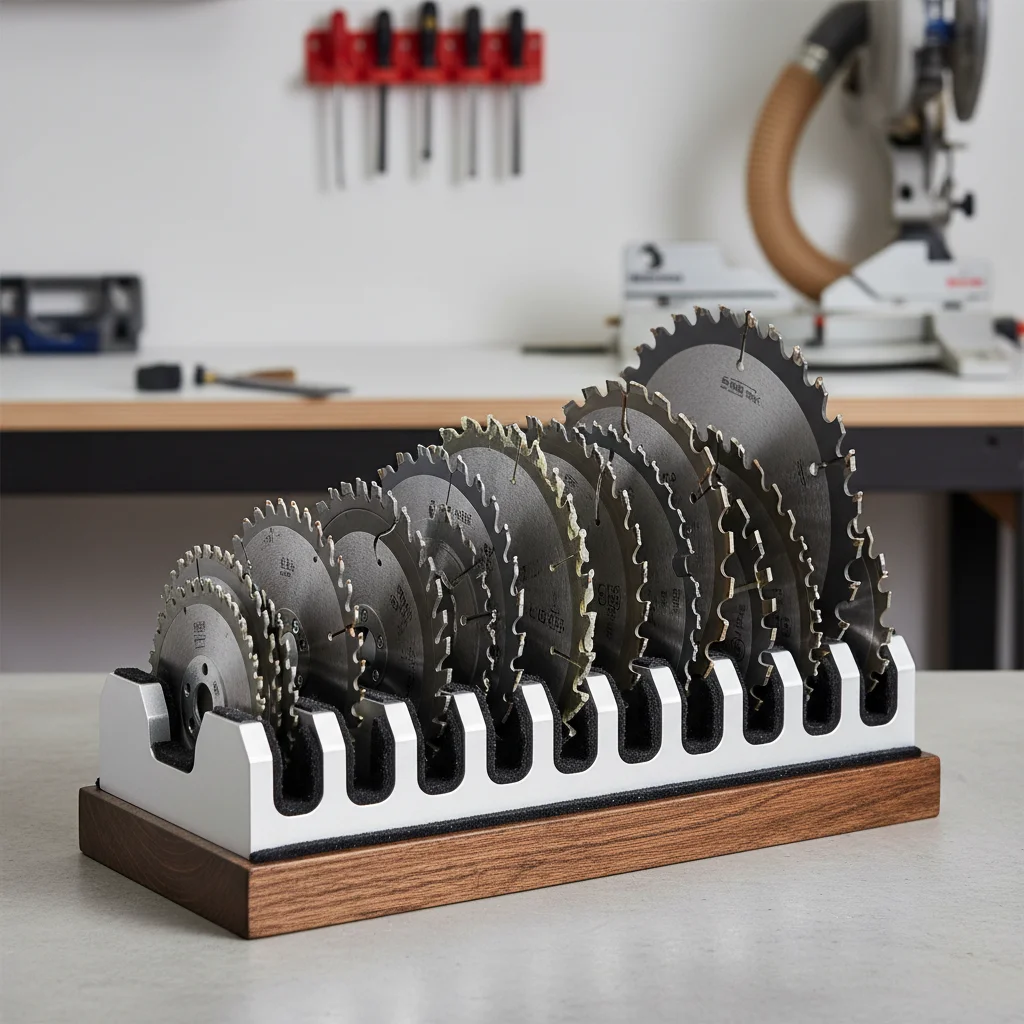
Proper miter saw blade storage is crucial for maintaining their sharpness, extending their lifespan, and ensuring safety in your workshop. There are five primary methods for storing your miter saw blades effectively, ranging from simple wall-mounted solutions to dedicated blade cases. Each method offers distinct advantages for different workshop sizes and user preferences, ensuring your blades remain in top condition and readily accessible for your next woodworking project.
Why Proper Blade Storage Matters
Storing miter saw blades correctly prevents damage to the delicate carbide teeth, which can easily chip or dull if left unprotected. Chips and dullness not only compromise cut quality but also increase the risk of kickback and other safety hazards. Furthermore, organized storage helps you quickly locate the right blade for the job, saving time and reducing frustration in your workflow. It also protects the blades from rust and corrosion, especially in humid environments.
Dedicated Blade Storage Cases
For serious woodworkers or those with a large collection of blades, dedicated blade storage cases offer the best protection. These cases typically feature individual slots or padded compartments for each blade, preventing them from touching each other. Many are made from durable plastic or metal, providing excellent impact resistance. Some cases are designed to be stackable, optimizing vertical storage space in your workshop. Look for cases with secure latches to prevent accidental opening.
Wall-Mounted Blade Racks
Wall-mounted blade racks are an excellent space-saving solution, particularly for smaller workshops. These racks often consist of a sturdy board with dowels or slots where blades can be hung vertically. This method keeps blades off your workbench, freeing up valuable surface area. Ensure the rack is securely mounted to wall studs and that the dowels are strong enough to support the weight of multiple blades. Labeling each slot can help you quickly identify blade types and sizes.
DIY Plywood Blade Holders
|
Our Picks for the Best Miter Saw in 2026
As an Amazon Associate I earn from qualifying purchases.
|
||
| Num | Product | Action |
|---|---|---|
| 1 | SKIL 3601-02 Flooring Saw with 36T Contractor Blade, Red and black |

|
| 2 | WEN Universal Collapsible Miter Saw Stand, 350-Pound Capacity (MSA200) |
|
| 3 | Seesii Mini Circular Saw with Laser Guide,4.8A 4000 RPM Compact Corded Circular Saw with Rip Guide,3 Blades (4-1/2") for Wood,Soft Metal,Tile,Plastic Cutting,Max Cut Depth 1-11/16"(90°),1-1/8" (45°) |
|
| 4 | Metabo HPT 12-Inch Compound Miter Saw | Xact Cut LED Shadow Line System | Dual Bevel | C12FDHB |
|
| 5 | Stanley 1-20-600 Saw Storage Miter Box with Saw, Black |
|
| 6 | WEN MM0713 9.5-Amp 7.25-Inch Single Bevel Compact Sliding Compound Miter Saw with LED Cutline Guide, Black |
|
| 7 | Makita LS0816F 8-1/2” Slide Compound Miter Saw |
|
| 8 | HAUTMEC 14 Inch Clamping Miter Box with Adjustable Jaw & 4 Anti-Slip Clamps, Heavy Duty ABS Mitre Saw Box with 22.5°, 45°, 90° Cutting Angles for Woodworking, Trim, Frames, DIY Projects – HTHDM25036 |
|
| 9 | Olson Saw 35-241 Fine Kerf Saw 35-550 42 tpi with Aluminum Thin Slot Miter Box, Slot Size .014-Inch, Slot Angles 45, 60, 90, Cutting Depth 7/8-Inch, Pack of 1 |
|
| 10 | Miter Saw Laser Guide - Miter and Portable Saw Laser Guide, Miter & Portable Saws |
|
If you enjoy DIY projects, crafting your own plywood blade holders is a cost-effective and customizable option. You can design a simple box with internal dividers or a slotted rack that fits your specific blade sizes. This allows you to tailor the storage solution to your exact needs and available space. Use good quality plywood and ensure all edges are smooth to prevent accidental cuts when retrieving blades. Adding a clear finish can also protect the wood from moisture.
Magnetic Tool Strips for Blades
While less common for miter saw blades due to their weight and size, strong magnetic tool strips can be used for smaller, lighter blades or for temporary storage. Ensure the magnetic strip is robust enough to hold the blades securely without any risk of them falling. This method offers quick access but provides less physical protection compared to cases or racks. It’s best suited for blades that are frequently swapped out.
Essential Tips for Blade Longevity
- Always clean your blades thoroughly before storing them to remove pitch, resin, and sawdust.
- Apply a thin coat of rust preventative oil to steel blades, especially if storing them in a humid environment.
- Store blades in a dry, temperature-controlled area to prevent warping and corrosion.
- Avoid stacking blades directly on top of each other without protection, as this can dull teeth.
- Regularly inspect your storage solution for any signs of wear or damage that could compromise blade safety.
By implementing one of these effective miter saw blade storage methods, you can significantly prolong the life of your blades, maintain their cutting performance, and enhance the safety of your woodworking environment. Investing a little time in proper storage will pay dividends in the long run, ensuring your blades are always ready for precision cuts.
Get our weekly buyer guide
Practical specs, not advice. Unsubscribe anytime.
