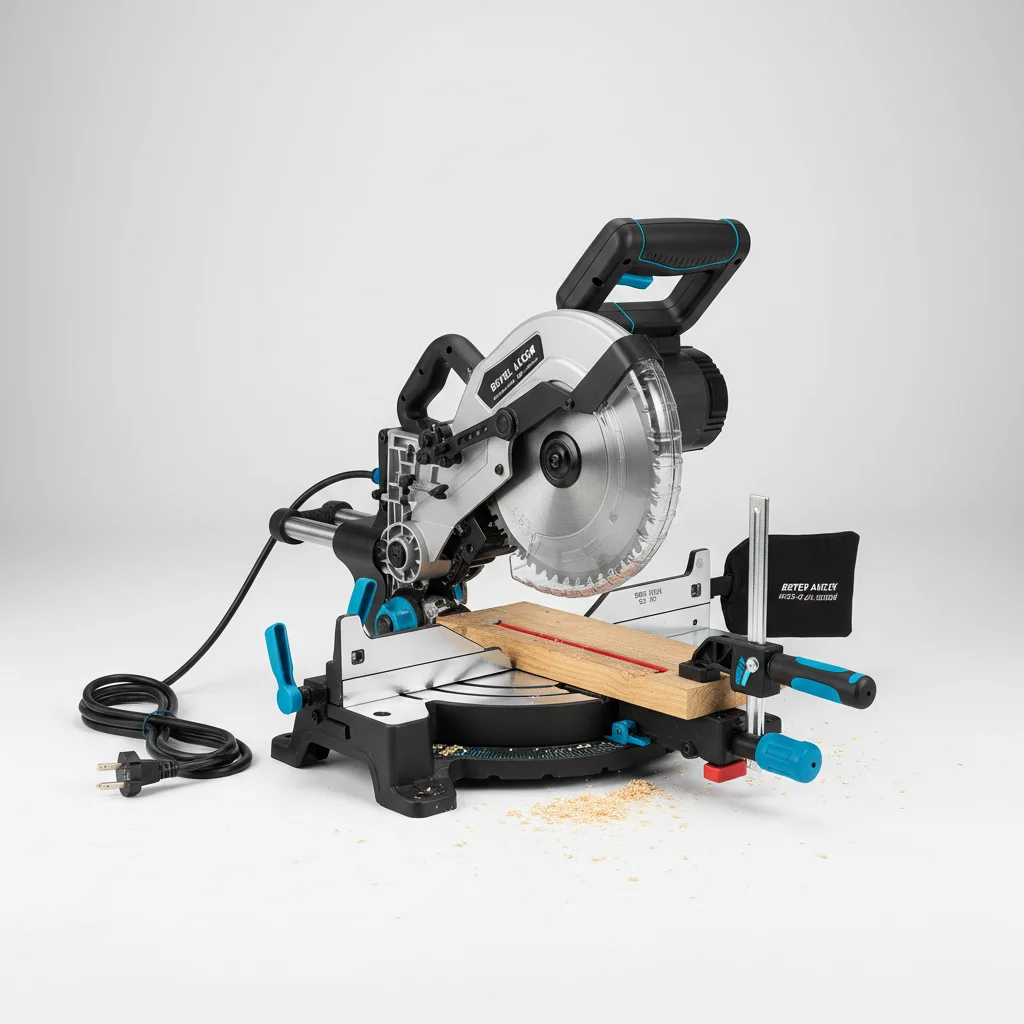
Choosing the right miter saw as a beginner can feel overwhelming, but a single bevel compound miter saw is generally the easiest to use for those new to woodworking. This type offers a good balance of functionality and simplicity, allowing for angled cuts in one direction without the added complexity of dual-bevel adjustments. It’s an excellent starting point for common DIY projects like trim work, picture frames, and basic furniture construction.
Understanding Miter Saw Types for Novices
Miter saws come in several variations, each with increasing complexity. For beginners, understanding the core differences is key. A standard miter saw cuts at fixed angles. A compound miter saw adds the ability to tilt the blade for bevel cuts. Single bevel models tilt in one direction, while dual bevels tilt both left and right. Sliding miter saws extend the cutting capacity for wider boards. For a beginner, the fewer moving parts and adjustments, the better for building confidence and mastering basic cuts.
Why Single Bevel Compound Miter Saws Excel for New Users
The single bevel compound miter saw simplifies the learning curve significantly. You can make both miter (angle) and bevel (tilt) cuts, which covers a vast majority of beginner and intermediate woodworking tasks. The fact that it only bevels in one direction means fewer settings to remember and less potential for confusion when setting up cuts. This focus allows new users to concentrate on safety and accurate measurement without being bogged down by advanced machine features they might not yet need.
- Easier setup for common angled and beveled cuts.
- Fewer controls to master compared to dual bevel or sliding models.
- More affordable entry point into miter saw ownership.
- Sufficient for most home improvement and craft projects.
- Helps build foundational skills before upgrading.
Essential Features for a Beginner’s Miter Saw
|
Our Picks for the Best Miter Saw in 2026
As an Amazon Associate I earn from qualifying purchases.
|
||
| Num | Product | Action |
|---|---|---|
| 1 | Metabo HPT 12-Inch Compound Miter Saw | Xact Cut LED Shadow Line System | Dual Bevel | C12FDHB |

|
| 2 | HAUTMEC 14 Inch Clamping Miter Box with Adjustable Jaw & 4 Anti-Slip Clamps, Heavy Duty ABS Mitre Saw Box with 22.5°, 45°, 90° Cutting Angles for Woodworking, Trim, Frames, DIY Projects – HTHDM25036 |
|
| 3 | WEN MM0713 9.5-Amp 7.25-Inch Single Bevel Compact Sliding Compound Miter Saw with LED Cutline Guide, Black |
|
| 4 | Stanley 1-20-600 Saw Storage Miter Box with Saw, Black |
|
| 5 | Miter Saw Laser Guide - Miter and Portable Saw Laser Guide, Miter & Portable Saws |
|
| 6 | Olson Saw 35-241 Fine Kerf Saw 35-550 42 tpi with Aluminum Thin Slot Miter Box, Slot Size .014-Inch, Slot Angles 45, 60, 90, Cutting Depth 7/8-Inch, Pack of 1 |
|
| 7 | Makita LS0816F 8-1/2” Slide Compound Miter Saw |
|
| 8 | SKIL 3601-02 Flooring Saw with 36T Contractor Blade, Red and black |
|
| 9 | Seesii Mini Circular Saw with Laser Guide,4.8A 4000 RPM Compact Corded Circular Saw with Rip Guide,3 Blades (4-1/2") for Wood,Soft Metal,Tile,Plastic Cutting,Max Cut Depth 1-11/16"(90°),1-1/8" (45°) |
|
| 10 | WEN Universal Collapsible Miter Saw Stand, 350-Pound Capacity (MSA200) |
|
When selecting your first miter saw, look for features that enhance ease of use and safety. A clear, easy-to-read miter scale and positive stops at common angles (like 0, 15, 22.5, 30, and 45 degrees) are invaluable. A reliable blade guard and a dust collection port are also crucial for a safe and clean workspace. Consider a model with a comfortable handle and accessible controls. While laser guides can be helpful, they aren’t strictly necessary for learning and can sometimes be a distraction if not properly calibrated.
For a solid entry-level option, consider the. It offers robust performance and user-friendly features that are perfect for those just starting out.
Safety First: Operating Your First Miter Saw
Regardless of the type of miter saw you choose, safety must always be the top priority. Always wear appropriate personal protective equipment, including safety glasses and hearing protection. Ensure your workpiece is securely clamped before making any cut. Keep your hands clear of the blade path and allow the blade to reach full speed before engaging with the material. Read your saw’s manual thoroughly before operation. Proper technique and a respect for the tool will prevent accidents and ensure a positive learning experience.
When to Consider Upgrading Your Miter Saw
As your skills grow and your projects become more ambitious, you might find yourself needing a miter saw with more advanced capabilities. If you frequently work with very wide boards, a sliding miter saw will become essential. For complex crown molding or intricate trim work that requires bevels in both directions without flipping the workpiece, a dual bevel compound miter saw will be a significant upgrade. However, for the vast majority of initial woodworking endeavors, a single bevel compound miter saw will serve you well and provide an excellent foundation.
For those ready to explore more advanced options, theis a highly recommended choice for its versatility and precision.
Get our weekly buyer guide
Practical specs, not advice. Unsubscribe anytime.
